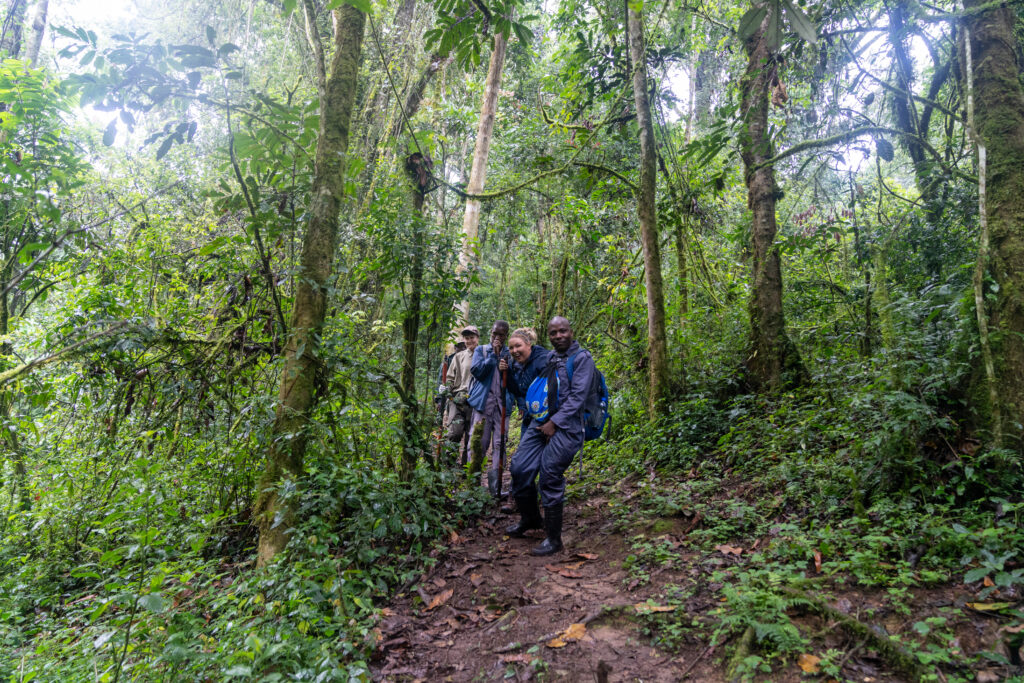
Hiking Trails for Bwindi, Uganda, Safaris.
How Long Are Hiking Trails In Bwindi: Gorilla trekking in Bwindi Forest timings and conditions vary tremendously as the gorillas move continuously through the rainforest, and this also determines how challenging the gorilla trek will be that day of the trek.
Gorilla trekking in Bwindi Impenetrable Forest National Park is one of Uganda’s most popular wildlife experiences. The duration of the trek can vary depending on several factors, such as the location of the gorilla family, terrain, and trekking conditions.
Before the trek begins, all trekkers gather at the park headquarters for a briefing. This includes an overview of the trek, safety guidelines, and dos and don’ts for interacting with the gorillas. The briefing is essential for ensuring the safety of both visitors and gorillas. The actual trekking time varies greatly depending on several factors:
Location of the gorilla family: Bwindi is home to several habituated gorilla families. Some families are located relatively close to the park headquarters, while others may require a more strenuous hike. On average, trekkers may walk anywhere from 2 to 6 hours to reach the gorillas.
Terrain: The terrain in Bwindi is steep and can be challenging, as the park is covered with dense forests and hills. Some groups may trek on gentler paths while others might need to ascend and descend steep slopes.
Once trekkers find a gorilla group, they are able to spend one hour observing them. This time is strictly regulated to minimize disturbance to the gorillas. The rangers also ensure that tourists maintain a respectful distance and that no harm comes to the gorilla during their visit. It’s always a magical hour, watching the gorillas interact with each other in their natural habitat. After spending time with the gorillas, tourists are able to retrace their steps back to the park headquarters. Depending on the trek, the journey back can take 1 to 3 hours.
The distance walked during the Uganda gorilla trekking can take more than 9 miles, which is approximately 3 hours to find the gorillas, and this means tourists will spend approximately 6 hours each way. Tourists set off for their trek at 8 am and will be back by 3 pm, and this only applies to a normal trek.
Bwindi Activities Beyond Gorilla Trekking
Bwindi National Park lies in southwestern Uganda on the edge of the rift valley and has a variety of attractions ideal for both tourists and researchers. There are plenty of activities tourists can do in Bwindi Impenetrable National Park. Some of the activities include community tourism, gorilla trekking, nature walks/hiking, bird watching, and community tourism. Apart from Uganda gorilla trekking, these are some of the activities that can be done in Bwindi Park:
Hiking through the forest: The hike through Bwindi Forest can be a one-day or longer hike from the north of Bwindi to the south, called Nkuringo, where one can stay overnight and continue the next day down to the scenic Lake Mutanda, where they paddle across a wooden dugout and continue to the town of Kisoro. This is the most popular hike along two trails of Bwindi; however, there are other trails and nature walks, most of them easy to moderate in and near the forest. Hiking through the forest is always with a guide.
Nature walks: the park offers a range of hiking trails that vary in difficulty and length. Allowing visitors to explore its diverse ecosystems, from waterfalls and swamps to high-altitude ridges. Popular trails include the Munyaga River Trail, which is ideal for spotting primates and forest birds, and the Rushura Hill Trail, which offers panoramic views of the forest, lakes, and even distant peaks of the Virunga Mountains. These guided nature walks provide a peaceful way to explore the forest’s biodiversity and discover its hidden beauty beyond the gorillas.
Birdwatching: The diverse habitats in Uganda’s most ancient forest imply that it is the perfect habitat for a diversity of bird species, with about 350 recorded different species, 23 of which are endemic. With over 350 bird species, including 23 species endemic to the Albertine Rift, Bwindi is a top destination for bird watchers. Some rare species that can be spotted in the park include the African green broadbill, Shelley’s crimsonwing, and the Grauer’s swamp warbler.
The forest’s diverse birdlife thrives in the dense undergrowth and high canopies, offering bird watchers unique opportunities to spot rare species, many of which are difficult to find elsewhere. Bwindi’s trails offer excellent vantage points for birding.
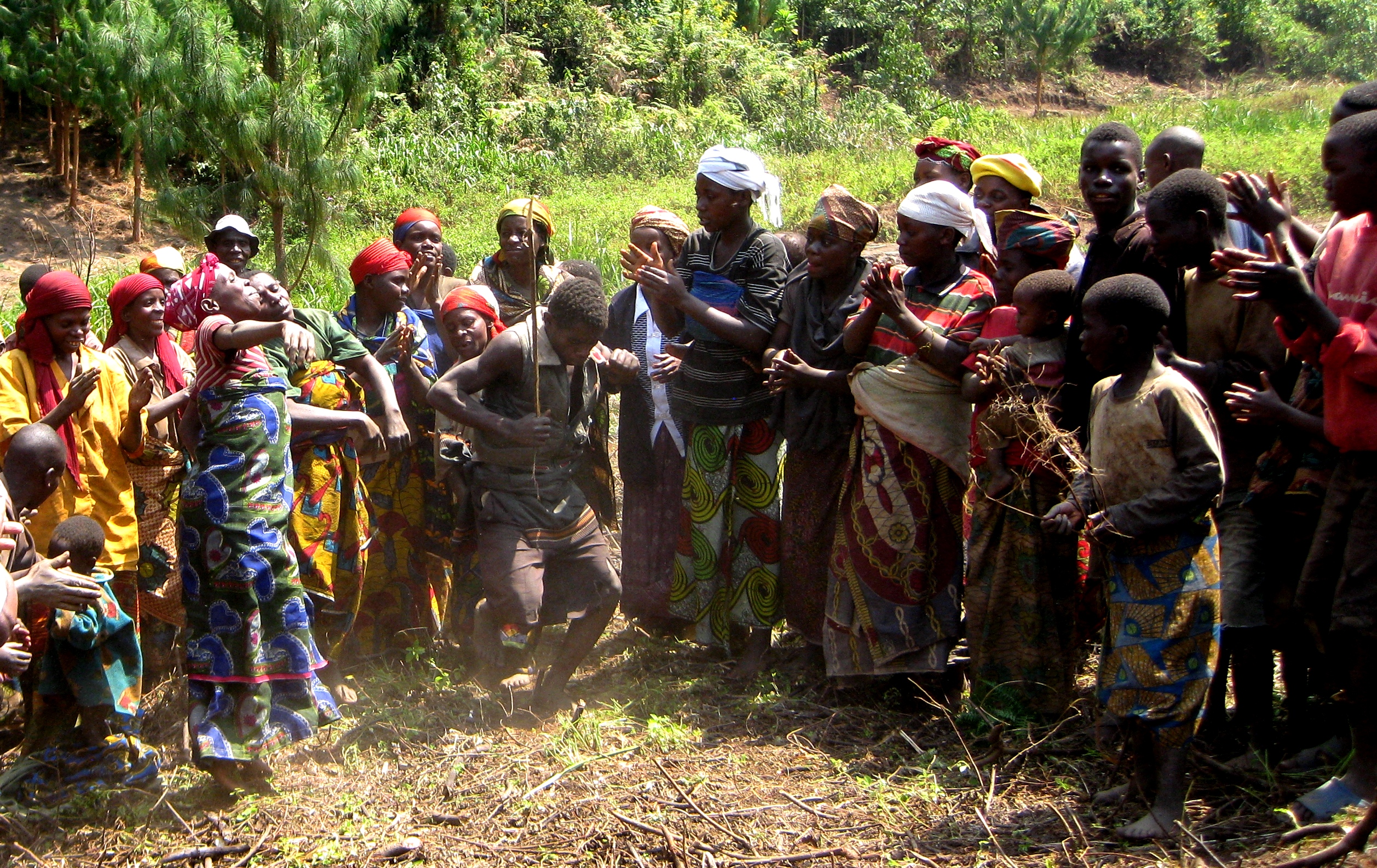
Batwa cultural experience: The Batwa pygmies are one of the oldest indigenous groups in the region, offering an immersive Ugandan cultural experience. The Batwa lived in the forest as hunter-gatherers for centuries before it became a national park.
Tourists join guided Uganda tours led by the Batwa themselves, where they learn about their traditional way of life, survival skills, and deep connection to the forest. The Batwa trails experience includes performances of traditional songs and dances, demonstrations of hunting techniques, and storytelling that gives insight into their ancient culture.
Cycling tours, where the mountain bike ride ventures into Bwindi, are managed by a women’s group and offer trained guides and a repair shop for these bikes, and every participant who helps in this program receives direct reimbursement from visitors to Buhoma enjoying the ride on the bike.
Butterfly and other wildlife viewing: While gorillas are Bwindi’s primary residents, the park also supports many wildlife species, including forest elephants, chimpanzees, monkeys, and various antelope species. Bwindi’s forest is also home to over 220 species of butterflies, adding to its vibrant biodiversity.
The Buhoma village walk: Here, there is a 3-hour cultural walk through the village; tourists learn about the ways and culture of the people who live in the Buhoma area on the edge of Bwindi Forest. The village walk is with a guide who is friendly and knowledgeable about local culture and customs.
Tourists are able to see people who make local crafts such as baskets with the most intricate designs, beer made from bananas, and a distillery that makes the local Waragi gin from bananas. Tourists are able to see how food is prepared over charcoal or open fire and visit schools, and it is certainly a cultural learning experience.