Bwindi Gorillas: How Near Can You Get?.
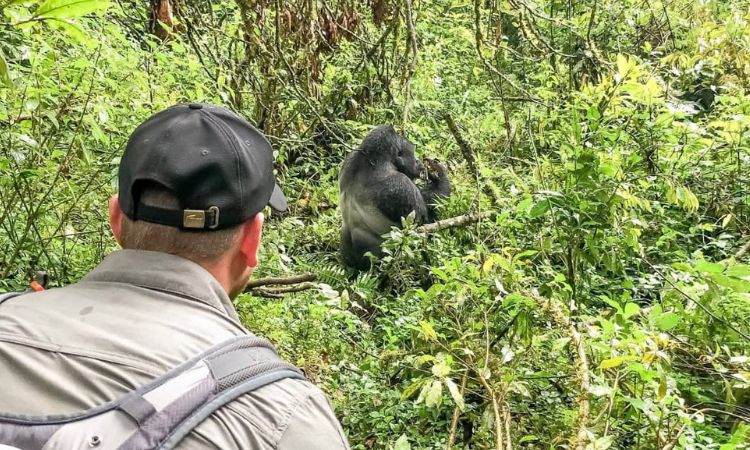
How close do you get to gorillas in Bwindi? Bwindi Impenetrable National Park is nestled in southwestern Uganda near the districts of Kisoro, Kabale, and Kanungu. It is a UNESCO World Heritage site that has rich, unique biodiversity. It comprises tropical lowland forest and Afro-montane vegetation that sits on 321 square kilometers. It borders the Democratic Republic of Congo near the Virunga Volcanoes. It comprises features, namely, 350 bird species with 23 Albertine Rift endemics. 120 mammal species, 300 butterfly species, and over 1,000 flowering plants with undergrowth. The park’s altitude ranges from 1,190 m to 2,607 m above sea level. Bwindi Impenetrable National Park hosts half of the world’s endangered species, which brings most of the tourists around the world to come and trek the mountain gorillas, hence earning tourism revenue. The mountain gorillas are important to the ecosystem of Bwindi because they feed on the thick vegetation and help in seed dispersal, promoting sustainability.
Mountain gorillas are called an endangered species because they face a lot of threats, causing a decline in their population. These creatures share 98% DNA with humans, making them highly susceptible to diseases. Distance matters while approaching the mountain gorillas because they are highly susceptible to human diseases. Getting close to these animals triggers their aggressive behaviors, yet they are calm animals.
Understanding mountain gorilla trekking
Gorilla trekking is the most stunning adventurous wildlife activity in Bwindi that is carried out all year round. The best months for trekking gorillas are during the dry season between the months of December and February and from June to August. Due to the lush, misty, thick rainforest and the rugged, steep terrain, Bwindi offers the best trekking experiences since it has various habituated gorilla families. Bwindi National Park is a home to over 19 habituated gorilla families within the four unique sectors, namely Buhoma, Ruhija, Rushaga, and Nkuringo.
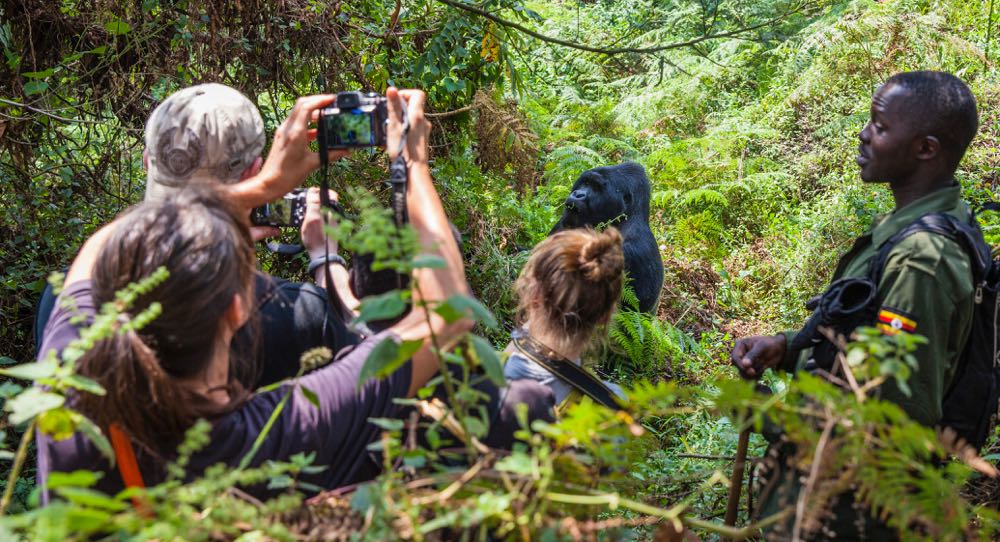
Trekking in Bwindi is a thrilling adventure that involves hiking through the thick lush rainforest to spot the mountain gorillas in their habitats. The trekking sessions start with a briefing at every headquarters of the trekking sectors, and this starts at 8:30a.m. after you have your breakfast. Guidelines and rules are being emphasized to ensure your safety and the protection of the mountain gorillas. You are then allocated groups of 8 people assigned to a gorilla family to spot. The hikes are led by well-experienced guides and rangers that lead you through the park and help you spot various creatures. Once you spot a gorilla family, you are given one hour to observe the behaviors, feeding habits, and social interactions of these animals, creating an unforgettable moment.
Gorilla treks involve navigating through the rugged, steep terrain since the park has an altitude of about 1,160 to 2,607 m above sea level. The trekking hours differ since some tourists can trek for 2 hours while others can trek for 8 hours depending on where the mountain gorillas spent the night or how fast you are to a gorilla family.
How close can you get near the mountain gorillas?
Despite gorilla trekking on a Uganda tour giving you an opportunity to watch closely the mountain gorillas, you are required to know that there are rules and guidelines that govern the trekking sessions. The rules are issued to tourists during the briefing point. You may be wondering how close you can get to these endangered species, but mountain gorillas, despite being habituated, are wild animals whose behaviors are unpredictable. During trekking, you are advised to keep a 7-meter distance away. In case a gorilla approaches you, you are required to avoid eye contact and stay calm. While near these gorillas, you are required not to eat in front of them or feed any infants. Observing conservation efforts ensures your safety and the protection of the mountain gorillas.
Official Distance rules
The rules when visiting the mountain gorillas aim at protecting these endangered species as well as the tourists. You are advised to adhere to the rules and regulations to conserve the environment in Bwindi National Park. The following are the rules that should be followed during the hikes to see the mountain gorillas:
A maximum number of eight individuals should visit each habituated gorilla family to prevent stress and disease spread.
While in the jungle, keep your voices low to be able to see the various wildlife creatures in the thick forest, like the forest elephant and different bird species, among others.
Maintain a 7-meter distance away from the mountain gorillas to prevent disease transmission.
In case a mountain gorilla charges towards you, avoid eye contact and slowly lie low on the ground to avoid danger.
Avoid drinking and eating in front of the mountain gorillas or feeding any infants.
Avoid any form of physical touch with the gorillas since they are wild animals.
Use flashless cameras since light cameras agitated the mountain gorillas.
Health and hygiene protocols.
If you are feeling any form of sickness or having any contagious disease like a cold, the flu, or a cough. You are required to stay behind.
If you feel like sneezing while near the gorillas, cover your mouth and nose and turn your head away to prevent the spread of diseases.
If you need to use the washrooms, kindly talk to your guide to provide for you a solution.
Avoid littering or dumping any materials and plastic waste in the park.
Putting on a mask to prevent disease spread and washing your hands before your trekking encounter.
Conservation impact
Gorilla conservation protects mountain gorillas in various ways. The revenue obtained from gorilla trekking permits is used to directly fund the anti-poaching patrols that help to remove snares that may injure the mountain gorillas and monitor the habitats and the movements of the gorillas.
Ensuring community engagement by giving the local communities 20% to support community developments like schools, health centers, and clean water projects. This has enabled the local people to stop depending on the forest resources, hence destroying the habitats of the gorillas.
The Uganda Wildlife Authority that governs all national parks in Uganda has hired rangers and guides that monitor the health of the gorillas. It has also conducted research and monitoring to ensure that the mountain gorillas are in good health. Partnering with international organizations and non-government organizations to fund the conservation strategies in Bwindi.
In conclusion
If you are wondering how you can get close to the mountain gorillas, it is possible, but you have to follow the safety rules that govern and protect these endangered species from any threat like diseases. Bwindi Impenetrable National Park offers great encounters with the gorillas since you get to observe their behaviors and social interactions.