Bwindi vs. Mgahinga National Park: Which Gorilla Trekking Destination Is Best?.
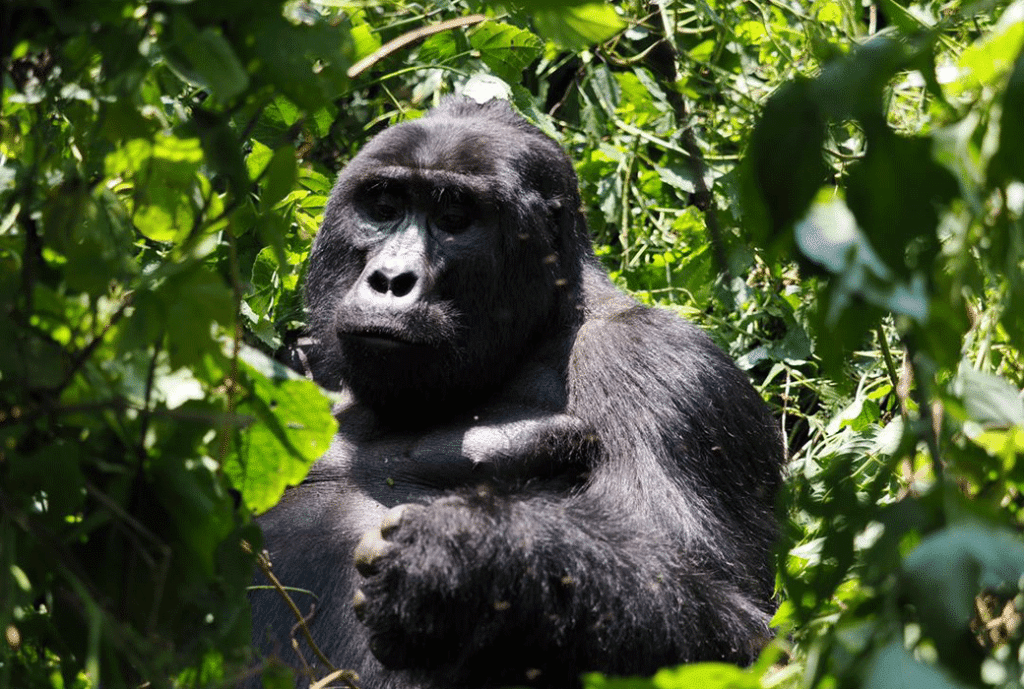
Bwindi Impenetrable National Park vs. Mgahinga National Park are national parks that host the world’s endangered species. They are located in southwestern Uganda bordering the Democratic Republic of Congo. Mgahinga National Park spans an area of about 33.7 square kilometers with an altitude of about 2,227 m to 4,127 m above sea level.
Location and accessibility
Bwindi Impenetrable National Park is situated in southwestern Uganda along the Kigezi Highlands. It is a UNESCO World Heritage site neighboring the districts of Kisoro, Kabale, and Kanungu. It spans an area of about 321 square kilometers in the western arm of the rift valley bordering the Democratic Republic of Congo.
There are different routes that access Bwindi National Park by road and air. If you are planning to visit Bwindi Impenetrable National Park by road, you can use the Kampala/Entebbe via the Masaka-Mbarara route, which takes about an 8- to 9-hour drive using a 4×4 vehicle. The other route is through Rwanda from Kigali International Airport via the Gatuna border or the Cyanika border, where a drive takes about 3 to 4 hours to reach Bwindi.
By air, tourists can book domestic flights through Uganda Aero Link from Entebbe International Airport or from Kajjansi Airstrip to Kisoro Airfield or Kihihi Airfield, which takes about 3 to 4 hours. Thereafter, you can get any public means like a taxi or car that takes you to the park premises.
Mgahinga National Park is located in southwestern Uganda in the Kisoro district, bordering the Democratic Republic of Congo and Rwanda. From Kampala, the distance is approximately 510km. The park can be accessed by road from Kampala via Kisoro, and this takes about 9 to 10 hours. From Rwanda via the Cyanika and Gatuna borders, it takes about 4 to 5 hours.
Park size and Landscape
Bwindi Impenetrable National Park is an area of about 321 square kilometers, while Mgahinga National Park spans an area of about 33.7 square kilometers. Bwindi is a UNESCO World Heritage site due to the ancient, diverse rainforest, which has lived for over 25,000 years, while Mgahinga is one of the smallest national parks in Uganda, known as “where gold meets silver.”
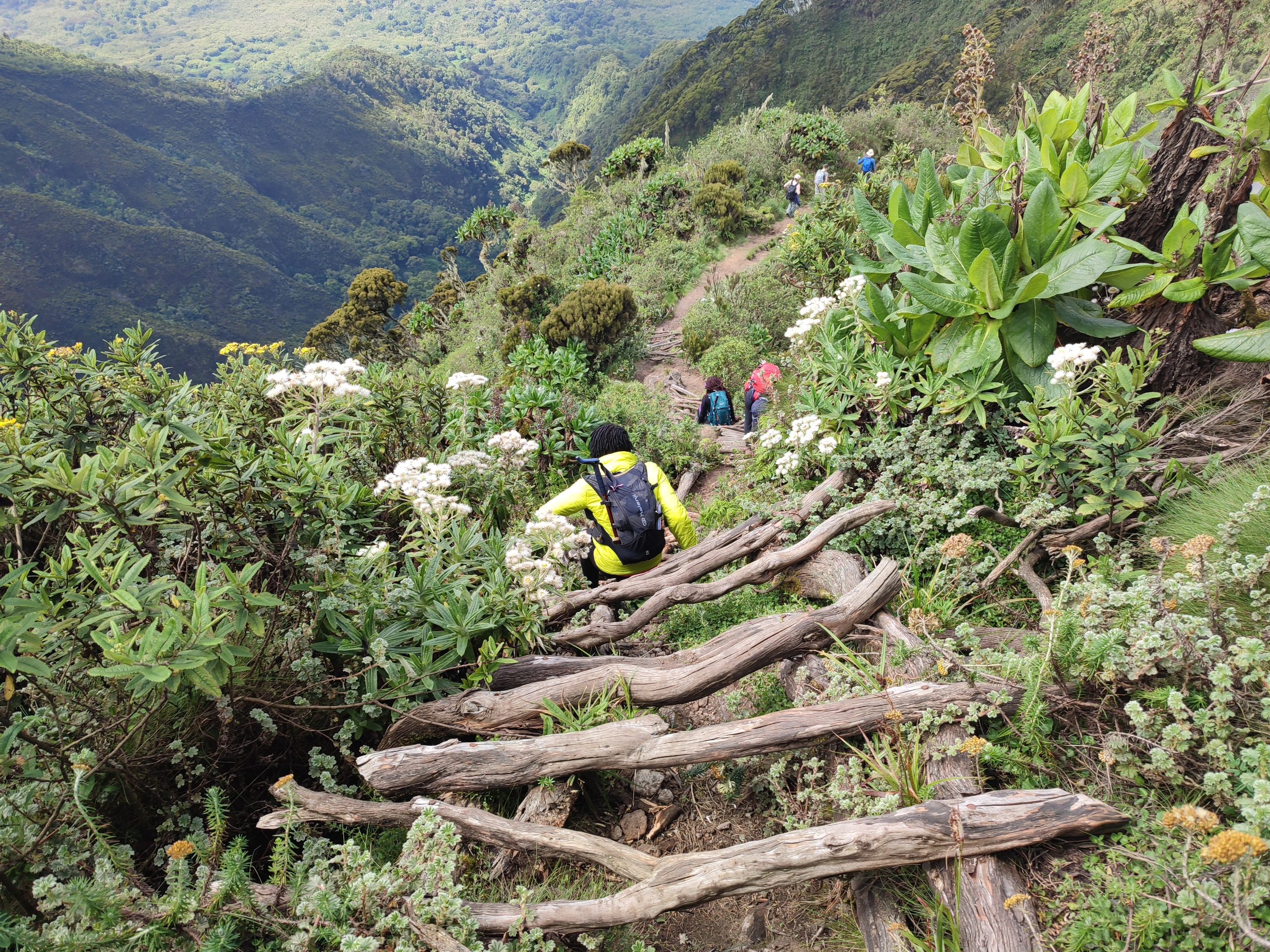
Bwindi National Park has a rugged, steep terrain consisting of deep valleys covered with thick, misty, dense vegetation. The vegetation in Bwindi comprises Afromontane and tropical lowland vegetation that boosts the ecosystem. The altitude ranges from 1,190m to 2,607m above sea level
Mgahinga National Park consists of three dormant volcanoes, like Mount Muhabura, Mount Gahinga, and Mount Sabyinyo. The vegetation comprises bamboo forests and alpine vegetation. It is located in the high altitudes of about 3,474m to 4,127m above sea level, offering panoramic views of local villages and volcanic scenery.
Gorilla trekking experience
The gorilla trekking in Bwindi National Park is more demanding and requires physical fitness. The forest comprises a rugged, steep terrain through the thick, misty rainforest, making it difficult to locate the mountain gorillas in their habitats. Gorilla trekking hikes take about 2 to 7 hours depending on where the mountain gorillas spent the night or how fast you can locate a gorilla family. Bwindi offers over 160 trekking permits per day.
Gorilla trekking in Mgahinga National Park is less challenging due to the open bamboo and the alpine forest. It has a high elevation but offers great views of the volcanic mountains. It is best for photographers since the atmosphere is clear for great pictures. It offers over 8 permits per day.
Biodiversity and Wildlife
Bwindi Impenetrable National Park on a Uganda safari is a habitat for 19 habituated gorilla families and various primates like the chimpanzees, baboons, and black and white colobus monkeys, among others. Over 120 mammal species, namely the forest elephants, which are few in number; the giant forest hogs; the duikers; and the buffalo. Over 350 bird species, with 23 Albertine rift endemics, for example, the African green broadbill and Rwenzori turaco, among others. Reptiles and amphibians like the snakes and frogs. Over 1,000 flowering plants, including 130 tree species, 104 ferns, orchids, and over 300 butterfly species.
Mgahinga National Park, with only one habituated gorilla family, unique golden monkeys, a habitat for over 70 mammal species like the buffaloes and elephants, and over 180 bird species.
Activities besides gorilla trekking
Bwindi Impenetrable National Park is known also for carrying out gorilla habituation experiences where tourists spend four hours observing the feeding habits and social interactions of the mountain gorillas. hiking and nature walks along the forest trails like the Ivy River Trail. Bird watching, since it is a paradise for birders with migratory and Albertine rift endemics; the Batwa cultural experience, among others.
Mgahinga National Park offers tourists the spot for seeing the golden monkeys and volcano hiking through the major volcanoes, namely, Mt. Muhabura, Mt. Gahinga, and Mt. Sabyinyo, which provide panoramic views of the Virunga Volcanoes. The Batwa cultural trails, nature walks, and birding.
Accommodation options
Lodges around these parks offer excellent accommodation facilities with high-quality services.
Bwindi National Park lodges range from luxury to budget-friendly lodges. Luxury lodges in Bwindi include Sanctuary Gorilla Forest Camp, Chameleon Hill Lodge, Clouds Mountain Gorilla Lodge, Mahogany Springs Safari Lodge, and others. Mid-range lodges include Ruhija Gorilla Safari Lodge, Rushaga Gorilla Camp, and Ichumbi Gorilla Lodge, among others. Budget lodges include Trekkers Tavern Cottages, Ichumbi Gorilla Lodge, among others.
Accommodations in Mgahinga National Park include Mount Gahinga Lodge, which is a luxury lodge; Amajambere Iwacu Community Camp; Travellers Rest Hotel; and Lake Mutanda Resort.
Climate
Bwindi Impenetrable National Park experiences annual rainfall patterns with two wet seasons that run from March to May and from September to November. Temperatures range from 7°C to 20°C and from 2°C to 27°C. The dry season, which is the best season for experiencing your adventure, runs from June to August and from December to February.
Mgahinga National Park experiences temperatures that range from 27°C and drop to 9°C. It experiences low amounts of rainfall, and the dry season runs from December to January and from June to July, while the wet season runs from February to May and from September to November.
In conclusion
Whether you choose your adventure from Bwindi National Park or from Mgahinga National Park, you will experience a successful encounter while on your Uganda safari.