Bwindi Gorilla Trek: Photography Tips for Visitors.
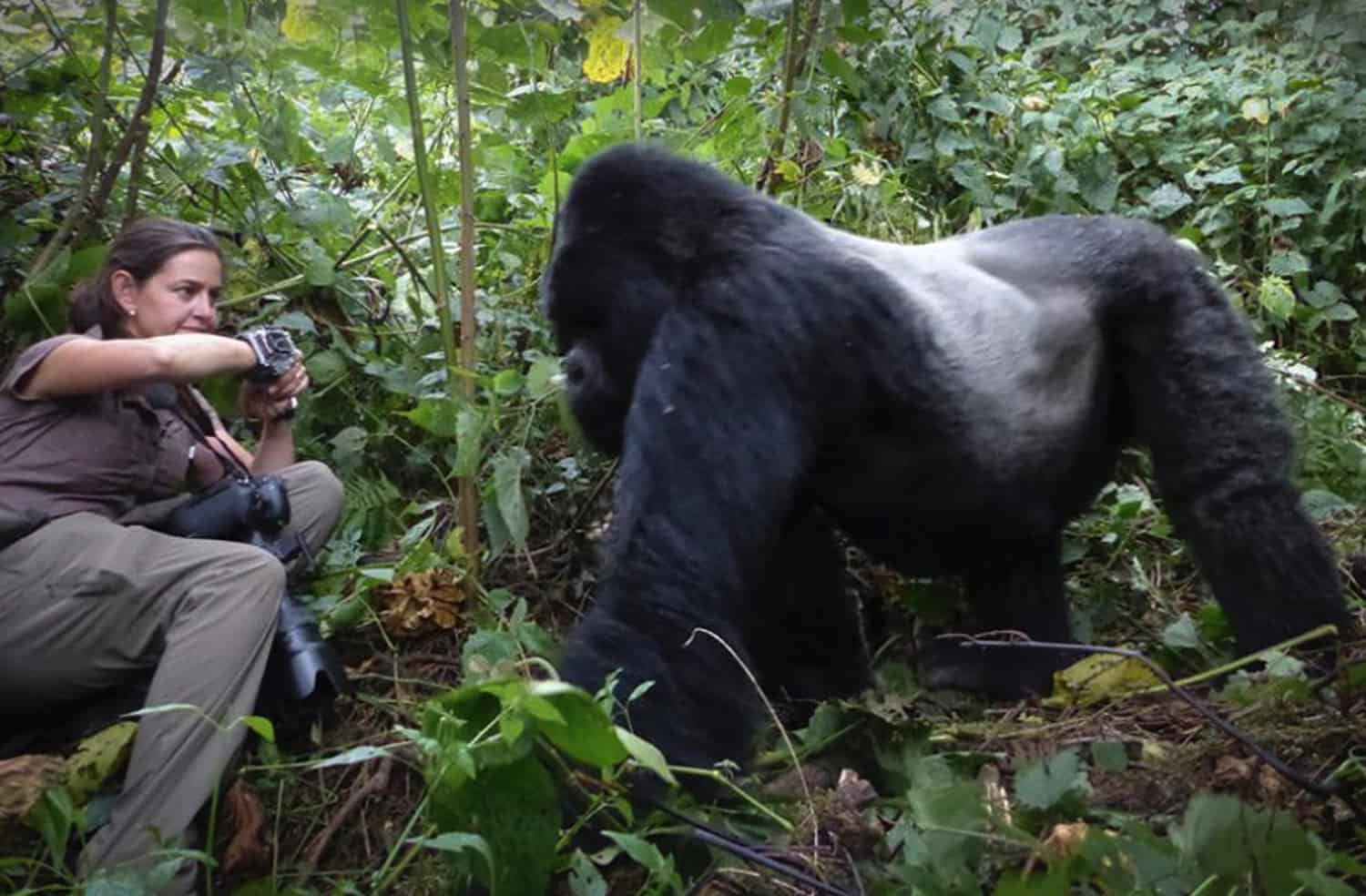
Gorilla Photography Tips For Bwindi Treks: Bwindi Impenetrable National Park is located in southwestern Uganda with an ancient rainforest that has lived for over 25,000 years. It is a UNESCO World Heritage site with thick, dense vegetation and is the habitat of half of the world’s endangered species. Bwindi National Park is unique for photographs because it has thick, dense rainforest compared to the open bamboo forest. The park comprises deep valleys and steep highs best for photography opportunities. Since it hosts half of the world’s endangered species, it offers the best gorilla moments for filmmaking and photography.
Filming the mountain gorillas is one of the most thrilling activities that draws us close to these creatures. The best experience of creating lasting moments is through capturing the gorillas as we trek with them. Gorilla photography can be done by respecting the gorilla habitats, emphasizing gorilla conservation for future generations.
What to expect on a Bwindi trek
Bwindi Impenetrable National Park is known for hosting over 400 mountain gorillas. Before visiting Bwindi, you should expect the following: the forest is comprised of thick, dense, misty vegetation cover, rugged, steep terrain, and deep valleys. Gorilla treks in Bwindi are led by trained guides that lead you through the jungle to be able to locate the mountain gorillas in their natural habitats. Each trekking group comprises 8 individuals for each gorilla family.
When you spot the mountain gorillas, you are strictly given one hour to observe these giant creatures, and regulations should be followed, like maintaining a 7-meter distance from the mountain gorillas. When you are heading for your photography safari in Bwindi, ensure that you pack essential equipment to make your trek successful.
Essential Camera Gear
Before preparing for your gorilla photography, essential camera gear is required. Selecting the perfect lenses for capturing the mountain gorillas’ images on your Uganda safari. The camera lenses should be a 70-200mm f/2.8 lens to provide the perfect shots and enable you to zoom in and out. A fast and high-quality DSLR or mirrorless camera with low-light performance is highly recommendable for the thick, misty forest. The best cameras for gorilla photography should have a high ISO performance. For example, a 45MP camera that works best in low light. You should prepare to adjust the camera settings since the weather in Bwindi is unpredictable.
Shooting in low-light conditions
Gorilla photography can be challenging since these giant creatures stay in the thick dense forests with limited light rays. While taking photographs, we advise you to adjust your camera settings to improve the quality of images. The following camera setting will enable you to take clear photos:
- While taking photos, start with 800-1700 mm.
- An f/2.8 provides more light and creates a less blurry background.
- Use continuous autofocus to help you capture the movements of the gorillas.
- While filming, use a monopod or lean against the trees for steady shooting.
Tips for capturing the mountain gorillas
- Ensure that the camera battery is fully charged.
- Always carry extra memory cards in case one gets filled up.
- Avoid using flash cameras. Make sure that your camera has no flash to be able to capture photographs using the light beam.
- Since Bwindi experiences unpredictable rainfall, always keep your cameras in a waterproof bag.
- Use an f/2.8 or f/4 that helps you lift your shutter speeds in the thick rainforest.
Best angles and composition techniques
- While using the f/2.8 in the dense, thick rainforest, use a single focus point and ensure that it is on the eyes when taking the shot. If you fail to focus carefully, you will lose the shot.
- Embrace the high ISO since you may find it hard to get appropriate shutter speeds. If you do not push the ISO up to achieve the appropriate shutter speed, you will risk taking an image where the mountain gorilla is not sharp enough.
- While photographing the mountain gorillas, shoot in the shade. Since the light rays are very bright during the morning hours, it is better to shoot these creatures while in the shade since the light is consistent.
- While photographing the mountain gorillas, capture the animals’ character since they are calm and express their behaviors easily.
- Identify the perfect backgrounds for your gorilla photographs. Consider the background while capturing the gorillas.
Gorilla photography guidelines and regulations
Gorilla photographers are required to maintain a 7-meter distance from the mountain gorillas. This is emphasized to prevent the spread of diseases since mountain gorillas are highly susceptible to respiratory diseases. While taking photos, use a zoom lens to be able to capture the insights of the creatures.
Flash photography is highly prohibited since the camera lights startle the mountain gorillas and may act aggressively. It is highly advisable to use flashless cameras for better photography encounters.
Working with guides and rangers
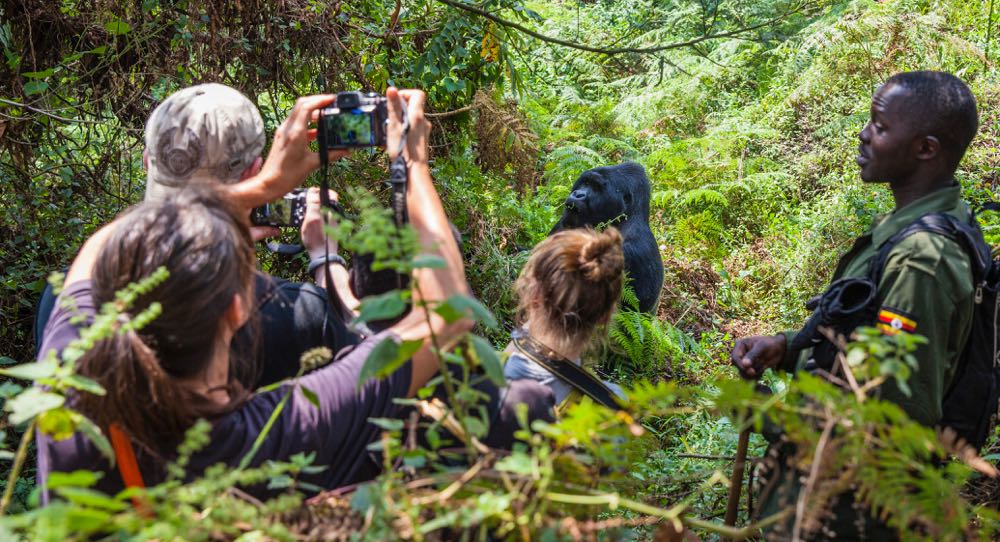
Working with experienced guides and rangers while taking gorilla photographs is crucial because they ensure your safety while in the jungle and enable you to spot the gorillas’ families that are familiar with humans. They help identify when the silverback is not around, providing you with the best angles for photography. Before the treks, the guides brief the participants about the photography safety rules and regulations.
The rangers guide you on the best positions to capture images without disturbing the mountain gorillas, which in case may rest and act aggressively towards you. They advise you about the postures for photographs by laying low or sitting down so as you gain focus of the eye level, which provides better portraits.
Common mistakes to avoid
- Flash cameras are highly prohibited and may cause signs of aggressiveness among the mountain gorillas.
- Since Bwindi has thick, dense vegetation, it creates dark conditions; therefore, failing to increase your ISO and using a wide aperture may result in dark and blurry photos.
- Avoid taking photos while standing. For clear and accurate pictures, lower your body or sit down to be able to get to eye level.
- Avoid overchanging the camera lens since this may bring dust to the sensor.
In conclusion
For better gorilla photography, always be prepared and flexible through using a fast lens and high ISO, and you should be able to overcome challenges. Bwindi Impenetrable National Park offers perfect photography experiences with the thick, misty, dense vegetation and the rich biodiversity comprising various flora and fauna.