Gorilla Intelligence: Are They Self-Aware Animals?
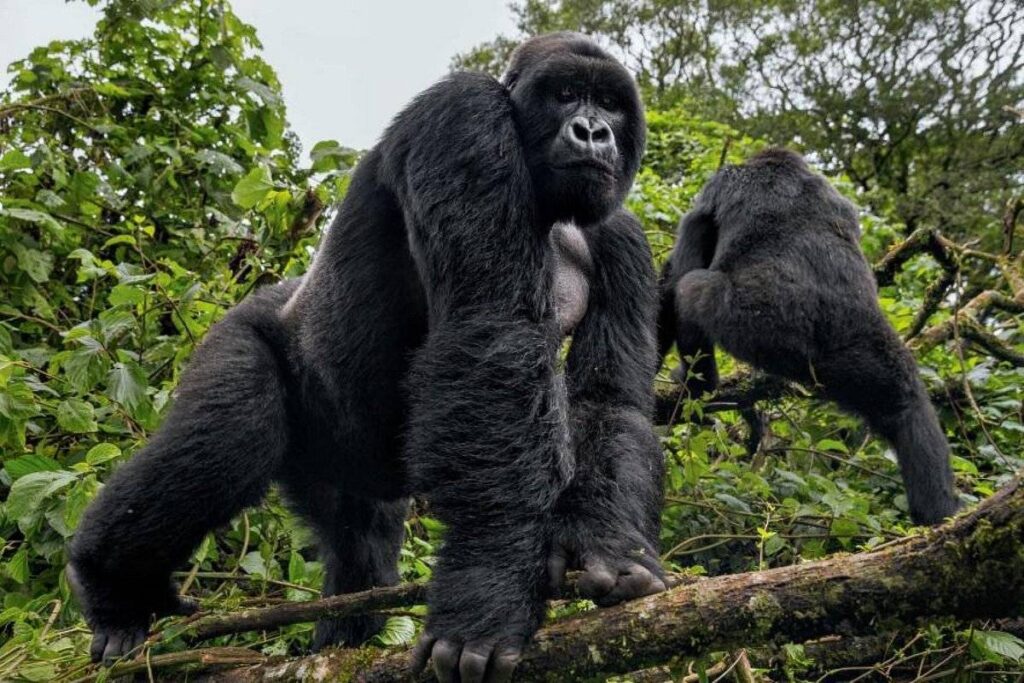
Are Gorillas Self-Aware? Gorillas have great awareness compared to chimpanzees. The self-awareness test was conducted by the researchers, which was a mirror test, where animals get a mark on their body that they can only see when looking in a mirror. If the animal tries to touch or remove the mark on their own body, it shows they recognize themselves, which shows self-awareness.
Why are gorillas endangered?
Gorillas are endangered species because they have a high risk of extinction. There are only two species of gorillas: Western gorillas and Eastern gorillas. These gorillas face threats that result in a decline in their population and low reproductive rates. The gorilla threats include habitat loss, human encroachment, poaching, fragmentation, and diseases. Both species, the western and eastern gorillas, have two subspecies, which include the western lowland and cross river gorillas and the eastern lowland and mountain gorillas.
The western lowland species has the highest population of about 300,000 gorillas, while the most uncommon species of gorilla is the Cross River gorilla. The eastern lowland gorillas faced a rapid decrease, remaining with 3,800 gorillas left in the wild. The different threats gorillas face are
Poaching is where gorillas are killed and hunted, and the main species hunted are the western and eastern lowland gorillas.
Diseases that have led to the rapid decrease of gorillas. The respiratory diseases like flu and cough affect gorillas since they share the same DNA with humans.
Habitat loss, where the main cause is human settlement. Different trees have been destroyed through illegal logging and expansion of communities. The most affected species is the cross river, which declined to 59%.
Therefore, humans being the great reason for their destruction, we owe them a hand in their protection and conservation of their habitats.
How many gorillas are left in the wild
Mountain gorillas’ population has increased over the past years. And between Virunga and Bwindi National Park, over 1,063 individuals live on the park premises. Despite mountain gorillas being an endangered species, conservation efforts have increased their population.
The total number of mountain gorillas left in the wild shows the number increased to 880 gorillas, and these gorillas were referred to as an endangered species. The various reasons that refer to these gorillas as endangered species are war, hunting, poaching, snares, and habitat destruction, resulting in their extinction. In the previous years, the number greatly increased due to conservation efforts.
What are the biggest threats to gorillas?
Mountain gorillas face various threats that result in their extinction. One of the threats is habitat loss due to human activities like human settlement and deforestation where trees are cut down.
Diseases are also another threat to the mountain gorillas since humans and gorillas have the same genes, making the gorillas vulnerable to human infections. Any human contact with a person who is diseased with the gorilla results in potential harm. Therefore, tourists who visit the gorillas are required to keep a 7-meter distance to protect both the humans and gorillas. Conservation efforts should be put in place since diseases are not only spread through contact but also human litter, which contaminates wildlife.
Poaching and hunting are one of the biggest threats to mountain gorillas. Poaching mountain gorillas for food has become a rare case due to the conservation efforts. It is the hunting with snares to capture bush pigs, antelopes, and other wild animals, and this occasionally kills or injures the gorillas. Gorillas are sometimes killed to meet the high demand for meat where the consumption of ape meat is considered to be prestigious.
Gorillas have a low reproductive rate, hence resulting in a population decline when hunted for meat. Direct poaching of these gorillas remains a real threat. Other threats include civil unrest, which impacts both people and wildlife.
Do gorillas have natural habitats
Mountain gorillas are the biggest tourist attraction all year around. And in Bwindi, there are about 21 endangered primates due to conservation efforts limiting their population decline.
Mountain gorillas live in the mountainous tropical rainforests. These forests receive rainfall yearly, encouraging the growth of different vegetation species, trees, and fruits. Temperatures in these forests range between 20 and 24°C. This enables the growth of succulent plants and shrubs.
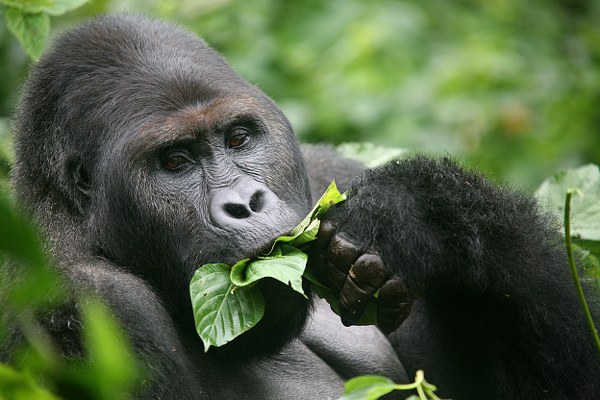
They are herbivore primates that feed on shoots, roots, leaves, and sometimes fruits. They feed on about 17 to 19kg of vegetation per day. They usually gather food during the morning and evening hours. They depend on the succulent plants for water since they do not have access to water sources. They rest and play during the day in their nested habitats and make beds through twigging the leaves, which they use during the night. Adults build nests on the ground while young ones shelter themselves in trees.
Do gorillas display emotions
Gorillas are friendly and gentle creatures. They display human-like features like sadness, joy, empathy, and laughter. They share 98% of the genes with humans, making us close relatives. In case of death, just like humans, gorillas express their emotions by showing a sad face and pity. Through playful moments, they laugh and smile, hence expressing their emotions.
How does climate change affect gorillas?
Mountain gorillas inhabit tropical rainforests that range between 2,200 and 4,300 meters. This environment provides an increase in food supply and thick vegetation that acts as shelter for the gorillas. Bwindi National Park is characterized by the cool temperatures and high humidity that regulate the growth of the vegetation. Climate change alters gorillas through the following:
- Temperature increase, which affects the habitats of the gorillas. Warm conditions at high elevation result in heat stress. Climate changes through unpredictable wet and dry seasons result in vegetation loss, heavy rains, and soil erosion.
- Climate shifts result in habitat loss; unpredictable weather disrupts agricultural activities like farming, resulting in low crop yields, deforestation, and resettlement by humans. Human settlements result in gorillas living near the local communities.
- Climate has resulted in food scarcity since food sources are becoming limited, forcing gorillas to travel long distances searching for food.
- Climate change has resulted in an increase of diseases. Gorillas are more exposed to zoonotic diseases due to the altering temperatures.
In conclusion, climate changes can be mitigated through global climate action and strengthening conservation policies.