The Role of Tourism in Protecting Gorillas.
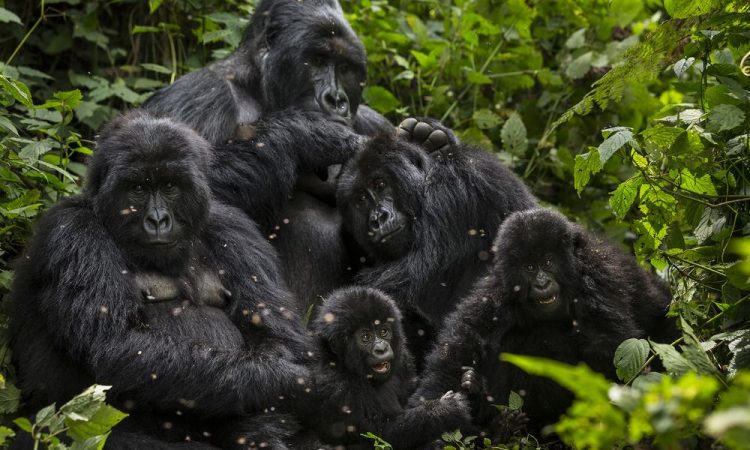
Does tourism help gorilla conservation? Bwindi Impenetrable National Park on a Uganda safari is a home of the endangered species called “mountain gorillas.” The park has promoted conservation for wildlife, tourists, and the local people. Gorilla tourism supports gorilla conservation through direct funding. This is acquired through tourists who purchase permits for gorilla trekking experiences and gorilla habituation.
Funds got from gorilla tourism help to protect gorillas through hiring rangers and guides who patrol the park during day shifts and night shifts. These personnel monitor the health of the gorillas, emphasize anti-poaching measures, and carry out research.
Tourism has led to the development of local communities where funds got from gorilla permits are used to support schools, health centers, water projects, and even infrastructural development, hence giving the local people a strong incentive to protect the gorillas rather than hunt them down.
It has resulted in employment opportunities where thousands of people are employed, like the porters, guides, rangers, and lodge staff, hence improving their standards of living.
Tourism has enabled the protection of gorilla habitats, where Bwindi National Park became a UNESCO World Heritage site, which protects the park from logging and encroachment. It has encouraged afforestation through planting trees, hence restoring the degraded areas.
Tourism has helped to build global awareness where travelers from different countries come to adventure and see the endangered creatures. Some take photos and do social media, hence raising global attention. Some tourists have offered donations, promoted global conservation partnerships, and encouraged strong protection policies.
Tourism has enabled daily monitoring of habituated gorilla families to check for injuries, illnesses, or any behavioral changes, and this is done through hiring gorilla doctors that provide treatment for any illnesses.
Gorilla tourism has helped in the marketing of other national parks in Uganda, like Queen Elizabeth National Park.
What role do gorillas play in the ecosystem?
Gorillas are primates that live in the thick, misty rainforests. They are different gorilla species that include eastern and western gorillas. They are herbivores that feed on plant parts like stems, roots, fruits, and bamboo. Gorillas play a crucial role in the ecosystem through:
- Promoting seed dispersal where they feed on fruits and disposing of the seeds in different areas where they grow to form new plants. When the plants mature, they create canopies that act as habitats for other wildlife species like birds.
- Gorillas move in different areas of the park, creating openings that enable sunlight to penetrate through the thick forests, enabling low plants to grow.
- They are a source of food to predators like leopards, promoting the survival of other wild animals.
- Mountain gorillas are pest controls through feeding on insects like termites that destroy plant growth, hence increasing plant population.
- Through their frequent movements, mountain gorillas create trails that act as drainage channels, hence improving soil erosion and flooding. The trails improve soil drainage and water infiltration.
Can gorillas swim?
Gorillas are intelligent primates, but they are not known for swimming. While humans have the ability of acquiring swimming skills, gorillas lack this capability.
Gorillas can’t swim naturally; they lack the physical adaptations required to float. Gorillas are unable to swim because of the large, muscular bodies making them denser than water. They lack buoyancy, making them sink in water rather than float on water.
They lack the swimming skills because in the wild they encounter situations that do not require them to swim, like their feeding habits and social behaviors do not involve navigating in water.
Gorilla behaviours around water
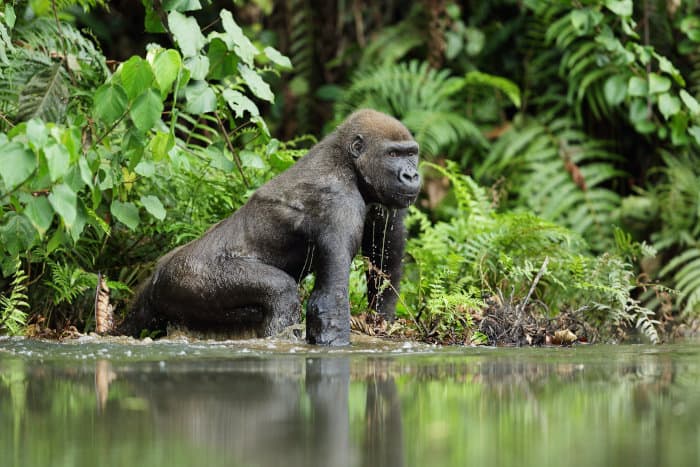
Gorillas wander through shallow swamps or steams when searching for food. They walk on their two legs with walks reaching their chests. In some cases, they use sticks to determine the depth of the rivers before crossing. During the rainy days, gorillas seek shelter in caves or under the thick trees.
Do gorillas fear water?
Gorillas do not fear, although they approach water sources with caution. They avoid deep water but can stay in shallow waters such as swamps or the shores of a water stream.
Are gorillas nocturnal or diurnal?
Gorillas are diurnal because they are more active during the day than at night. They are terrestrial because they live on the ground. They are more active during the early morning hours and late afternoon. As the sun rises, they start to hunt for food where they consume plant species only, like stems, roots, leaves, and sometimes fruits. During midday periods, they conserve energy by resting, and in the late afternoons, they resume hunting for food and explore new areas.
Why don’t gorillas eat meat?
Gorillas do not eat meat because their digestive systems are adapted to consume fibrous plant material. They have large stomachs with specialized bacteria that break down cellulose, the tough fiber in leaves and stems, and this makes them adapted to consuming plant species.
They are strict herbivores that rely on plant life. However, they sometimes consume small insects like termites, ants, and larvae that are a source of protein since their diet can consist of non-plant material. Unlike chimpanzees, which hunt for monkeys and small animals. Gorillas have no behavior that kills prey for food.
Are gorillas violent by nature?
Gorillas being peaceful creatures, they can be violent in some situations since they are wild animals. They are peacemakers and love their own company, but when threatened or provoked, they turn out to be violent. For instance, if visitors enter their territories and try to have direct contact with the gorilla individual, the silverback will stand on its two legs and start beating its chest, a sign that it shows when it’s charging towards the opponent.
Are gorillas gentle animals?
Gorillas are gentle creatures of the forest despite the wild character that makes them aggressive. They have intimidating looks.
In conclusion, the roles of gorillas in conservation and the ecosystem have contributed to the well-being of both the local communities and the game rangers both socially and economically. At Uganda Tours and Travel Safari, we believe that understanding gorilla behavior, conservation efforts, and eco-friendly guidelines are key to a safe and unforgettable encounter in Bwindi Impenetrable National Park.