Discover the Birds of Bwindi National Park.

Birds of Bwindi National Park: Besides mountain gorillas, Bwindi Impenetrable Forest National Park is a home to many beautiful bird species. Bwindi is one of the best national parks to go birdwatching in Uganda, with over 350 species, 23 of which are Albertine endemics and 14 of which are recorded nowhere else in Uganda. Beyond the dense misty forests and thrilling gorilla treks lies a hidden gem for bird enthusiasts—one of Africa’s richest birding destinations; it is also referred to as the “Birding Capital of Africa.” The park’s unique ecosystem, which ranges from montane forests to lowland areas, provides the perfect habitat for the stunning diversity of avian life. Bwindi Impenetrable Forest National Park is one of the best birding destinations in the southwestern part of Uganda.
The park has four sectors (Buhoma, Ruhija, Nkuringo, and Rushaga) where tourists can carry out birdwatching. The park is dominated by various vegetation types, which are homes and sources of food to different bird species within the region. Bird species in Bwindi Impenetrable Forest National Park include the following:
Grauer’s broadbill, little green sunbird, Shelley’s crimsonwing, Grauer’s swamp warbler, western green tinkerbird, handsome francolin, African emerald cuckoo, regal sunbird, white-tailed blue flycatcher, handsome spurfowl, white-starred robin, mountain yellow warbler, African water rail, white-browed crombec, red-chested flufftail, Rwenzori nightjar, bar-tailed trogon, blue-headed sunbird, and little green sunbird.
African stonechat, black-faced apalis, sooty flycatcher, black bee-eater, Rwenzori hill babbler, Albertine boubou, purple-breasted sunbird, Neumann’s warbler, Ross’s turaco, cinnamon bracken warbler, dusty tit, dwarf honeyguide, tit hylia, Rwenzori batis, fine-banded woodpecker, Carruther’s cisticola, Chapin’s flycatcher, great blue turaco, African black dart, red-chested fufftail, yellow-eyed black flycatcher, and barred long-tailed cuckoo.
Stripe-breasted tit, red-faced woodland warbler, western citril, fine-banded woodpecker, Klaas’s cuckoo, tambourine dove, grey-chested Kakamega, Rwenzori apalis, red-tailed greenbul, sooty falcon, grey cuckoo shrike, Sharpe’s starling, Ansorge’s honeyguide, banded prinia, stripe-breasted tit, cape wagtail, equatorial akalat, red-tailed bristlebill, velvet-mantled drongo, yellow-spotted barbet, and joyful greenbul.
African emerald cuckoo, mountain illadopsis, chestnut-throated apalis, slender-billed starling, northern puffback, brown-capped weaver, red-headed malimbe, white-headed sawwing, dark-capped bulbul, red-headed bluebill, Jameson’s antpecker, grey-winged robin chat, Bocage’s bush shrike, and black-billed turaco.
African broadbill, yellow-throated tinkerbird, black-faced rufous warbler, white-headed wood hoopoe, double-toothed barbet, many-colored bush shrike, hairy-breasted barbet, grey cuckoo shrike, western bronze-naped pigeon, scaly-breasted illadopsis, thick-billed seedeater, black-throated apalis, western black-headed oriole, olive-green camaroptera, blue-shouldered robin chat, and pink-footed puffback.
Bird watching is an activity that takes place throughout the year during Uganda tours to Bwindi National Park. The best time for birding around the national park is between March and September and also around November and April, when migratory bird species can be seen around the Bwindi forests. Bird watching within Bwindi Forest is best done during the morning and evening hours when the sunshine is not too hot. Birds of Bwindi Impenetrable Forests are best seen during nature walk activities through trails best known for bird watching, which are the bamboo zone, Buhoma waterfall trail, and Mubwindi Swamp. With a well-trained birding guide, passing through these trails gives one an opportunity to see more than half of the recorded bird species in case there is enough time to trek.
How much does it cost to see the birds in Bwindi Impenetrable Forest National Park?
A birder will need a birding permit and park entrance fees to look out for the different bird species in Bwindi Impenetrable Forest Park. The birding fee in Bwindi Forest is $40 for foreign non-residents, $30 for foreign residents, and UGX 30,000 for citizens of East African member states. The park entrance fee to Bwindi is $40 for foreign non-residents, $30 for foreign residents, and UGX 20,000 for citizens of East African member states.
Bwindi Birdwatching: Rare Albertine Rift Endemics.
Bwindi Impenetrable National Park is one of nature’s unspoiled national parks found in southwestern Uganda, covering an area of 331 sq km. Bwindi Impenetrable National Park has a vast diversity of mammal and bird species and is a home to a number of endangered wildlife species. Bwindi Impenetrable National Forest Park is also a home to a special group of bird species only found in the western rift valley, known as the Albertine Rift Endemics.
Albertine Rift endemics of Bwindi Forest: Bwindi Impenetrable Forest National Park is home to 23 Albertine Rift endemics. These bird species are only found in Burundi, DR Congo, Rwanda, and Uganda. These are the Handsome Francolin, Rwenzori Nightjar, Dwarf Honeyguide, African Green Broadbill, Red-throated Alethe, Archer’s Robin-chat, Kivu Ground-thrush, Rwenzori Turaco, Grauer’s Rush Warbler, Red-faced Woodland Warbler, Short-tailed Warbler, Grauer’s Warbler, Collared Apalis, Mountain Masked Apalis, Yellow-eyed Black Flycatcher, Rwenzori Batis, Stripe-breasted Tit, Purple-breasted Sunbird, Strange Weaver, Dusky Crimsonwing, and Shelley’s Crimsonwing.
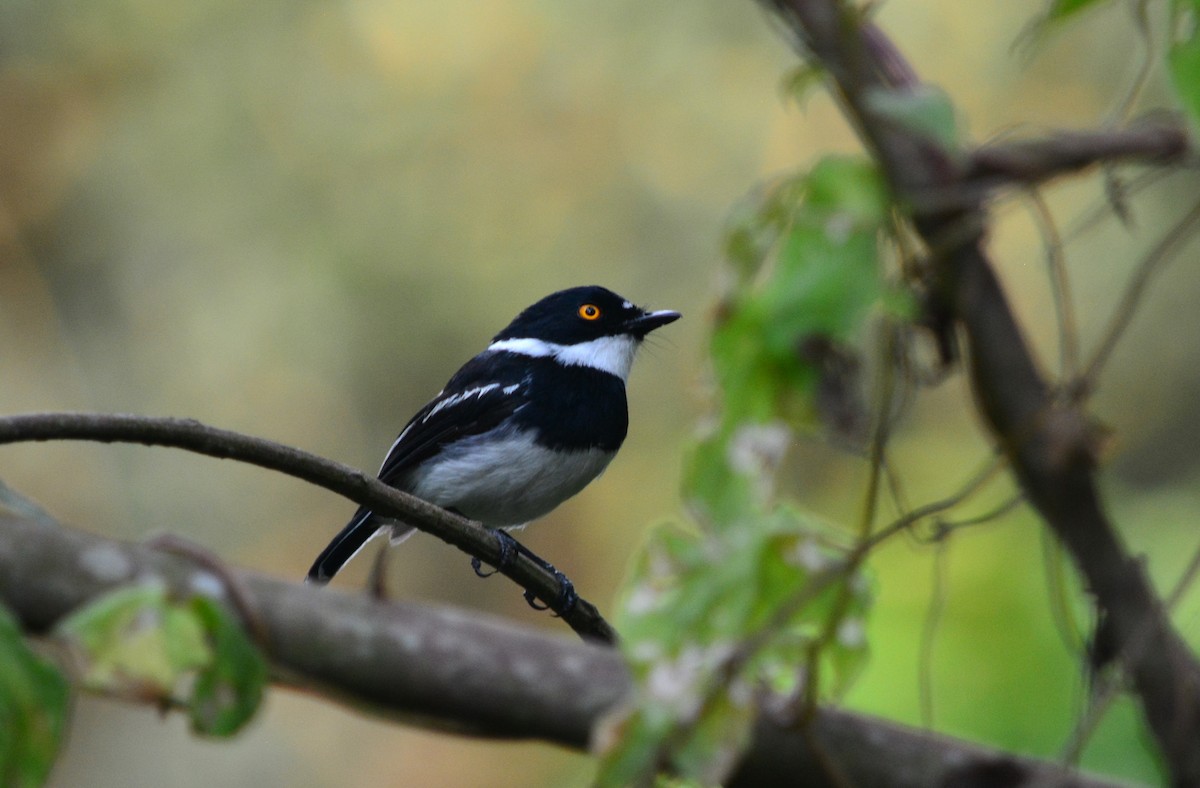
The Albertine rift endemics are part of what each passionate birder in a Ugandan birding safari wishes to sight, and here are details of some of the bird species:
Handsome Francolin
It is a terrestrial forest. A francolin is about 35 cm long with dark brown plumage (duller for the young ones), brown irises, bare red orbital skin, and a grey head. Red bill and legs. The female is slightly smaller, though both sexes are physically similar. The Handsome Francolin is an elusive and shy bird more easily heard than seen. It can only be seen early morning and late evening. Its feeding is mainly on seeds.
Ruwenzori Turaco (Gallirex johnstoni)
The Ruwenzori turaco is mainly herbivorous, with 92% of its diet being fruit and 6.3% leaves. The plumage is brilliant green and violent blue with red primaries. The crest is glossy green or purplish blue and short. The chin and throat are blue-black. It’s about 45 cm beak to tail and feeds on fruits and berries. They live in pairs or small family groups.
Ruwenzori Batis (Batis diops)
The Ruwenzori batis is a small flycatcher-like and shrike-like bird with contrasting black, grey, and white colors. It is 11–12 cm long from beak to tail. It feeds mainly on insects like beetles, caterpillars, and flies, which are eaten in a while. Its voice makes simple whistles, repeated at 2-second intervals.