
Serengeti National Park : One of Tanzania’s and possibly the world’s best national parks is Serengeti National Park. It is in Northern Tanzania, a safari destination known for its amazing wildlife. The greatest location to see lion prides and those of other land animals, including cheetahs, leopards, elephants, rhinos, African buffaloes, giraffes, zebras, and kudus, is in the Serengeti National Park. Additionally, the Serengeti National Park is home to over 500 different species of birds. It is also the only place on Earth where you can see the amazing “Wildebeest Migration,” which takes place every year from June to October and involves over two million animals migrating from the Serengeti ecosystem to the Mara ecosystem in Kenya by way of the Mara River, which divides Kenya and Tanzania.
The total area of the Serengeti National Park is 14,763 square kilometres. A few game reserves, including Grumeti Reserve, Loliondo Concession, and Mwiba Wildlife Reserve, are also part of Serengeti National Park.
A safari tour to Tanzania would not be complete without a stop at Serengeti National Park, which is home to the BIG-5—lions, elephants, African buffaloes, leopards, and hippos. Despite being a protected area since 1940, it was declared a national park in 1951. Serengeti National Park is home to over 5,000 lions. The Maasai word for it is “Siringet,” which translates to “Endless Plains.” It’s thought that the initial European settlers in Tanzania were unable to pronounce “Siringet.” Rather, he dubbed it Serengeti, and that became its current name.
Serengeti National Park is divided into four ecological zones, each with distinct ecosystem features. Central Serengeti National Park is also known as Seronera Valley. Beautiful wild creatures like leopards, several cats, caracals, lions, elands, hippos, elephants, hyenas, kudus, vultures, and many more can be found there. It is made up of transition zones and woodland plains. Since all of these animals are gathered in one area, the centre is the best place to visit year-round.
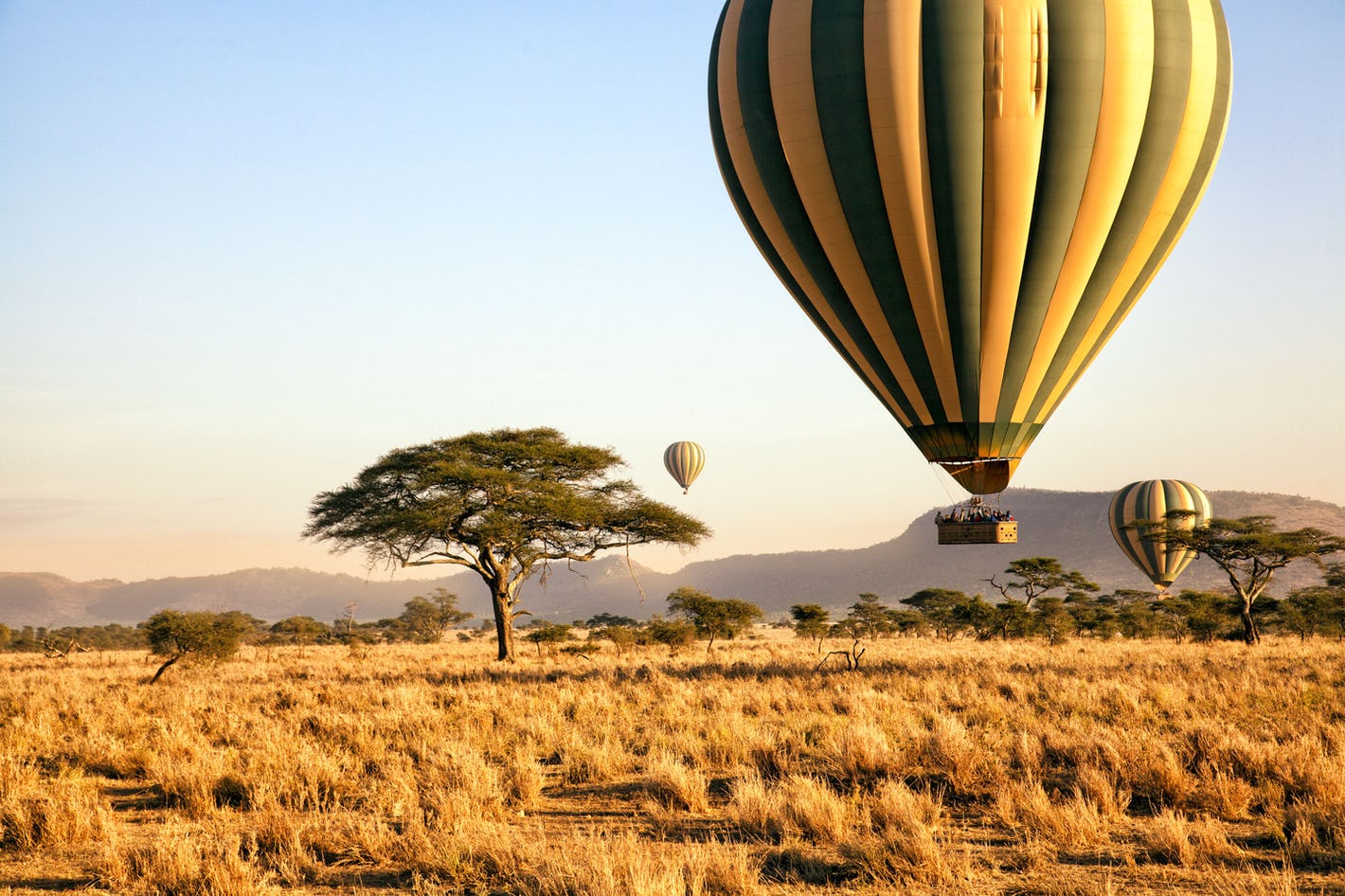
The Central Serengeti is the best place to see African kopjes; this national park is home to both Moru and Simba kopjes. Seronera Airstrip is another airstrip that handles a few domestic flights from Ruaha National Park, Kilimanjaro, Arusha, Dar es Salaam, Zanzibar, Maasai Mara, and so on. Private charters are also able to land at Serengeti National Park.
The Grumeti Wildlife Corridor, also known as the Western Serengeti, is a crucial ecological area for a Serengeti safari because a multitude of animals can be spotted here between May and July. The Mbalageti and Grumeti rivers supply sufficient water for animals to survive, and the ecosystem it inhabits is typified by open grasslands and birds like the Kori bustard, Marabou stork, Rufus-tailed weaver, and Grey-breasted spurfowl. Additionally, this region is the route of the Mbalageti River, which the wildebeest use to migrate from April to July in order to reach the northern Serengeti.
The Ndutu ecosystem, also referred to as the Southern Serengeti, is the best place to visit from December to March. The area, which is roughly 1,900 square miles in size and is dominated by granite kopjes and short grass plains, is ideal for photographers because it borders the Northern Ngorongoro Conservation Area, where a variety of animals, including African caracals, giraffes, lions, and crocodiles, can be seen. Lake Masek is the only nearby river where animals bend to drink each evening. Here, millions of wildebeest give birth each day during calving season. In the afternoon, Ndutu experiences temperatures between 23 and 26 degrees Celsius, and at night, it falls to 15 degrees Celsius. The airstrip nearest to the park is Ndutu Airstrip.
Migration safaris take place in the Northern Serengeti from June to October. This riverine region, which spans 2,200 square miles, is ideal for observing wildlife and has yet to be fully explored ecologically. For those who prefer fly-in wildlife safaris in the northern Serengeti National Park, Kogatende airstrip is the most frequently used airstrip in this area. Following their crossing of the Grumeti River, the herds of antelopes, zebras, and wildebeests will try to cross the Masai Mara River and enter Kenya. Lions, leopards, and nile crocodiles claimed the lives of hundreds of animals during this tragic event. Lobo Valley in the northern Serengeti is a great place to include in any itinerary for anyone planning a trip to see the big cats, as it is home to many of them.
Travelling through the Serengeti is an amazing experience. The wildlife in the park is diverse. The Serengeti National Park is visited by anyone who wishes to learn more about the wildebeest migration. Celebrities from all over the world, including Hollywood A-listers, have visited the park.
Due to the vastness of the Serengeti, travellers who wish to witness the migration must make reservations weeks in advance. It boasts amazing views of Kilimanjaro. While some birds, like flamingos and pelicans, are easy to spot, observe the birds that flock to the plains.