Exploring Batwa Music and Dance: Culture in Motion
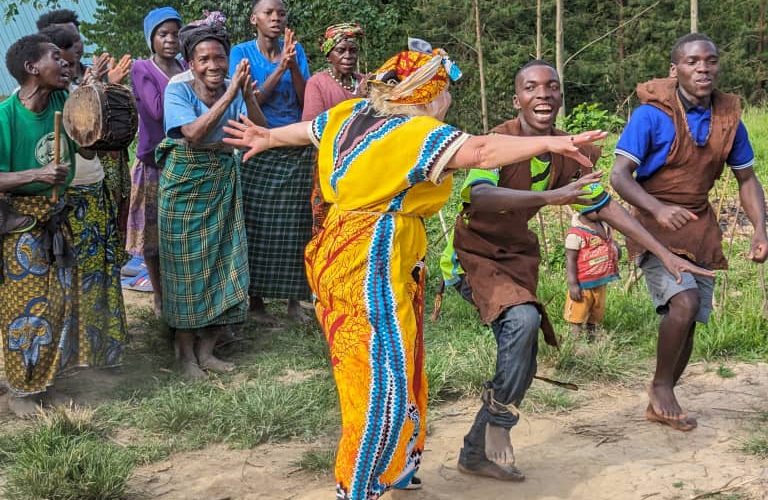
Traditional music and dance of the Batwa: Deep in the heart of the ancient southwestern rainforest lies the indigenous group of people. These people are the Batwa people, also known as the “forest dwellers,” the true people of the ancient rainforest. They are said to have originated from Central Africa. These people are hunters and gatherers who survived on hunting small animals and gathering wild plants. Their livelihood and survival depended on the ancient rainforest.
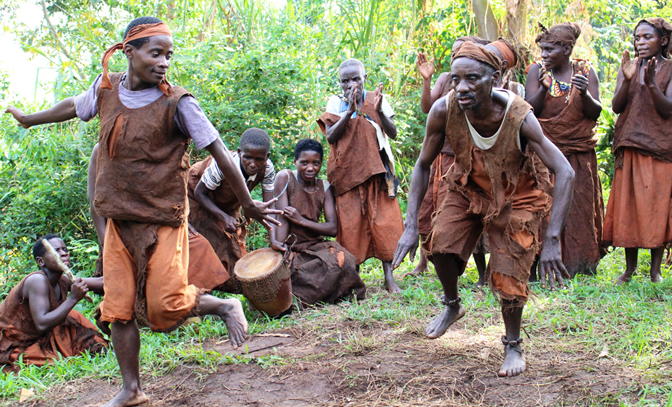
The Batwa Pygmies have a unique rich cultural heritage that involves storytelling, music, and dance. Music and dances are regarded as the living rhythms that preserve history and traditional culture. The music and dances of these people have a deep connection with the natural forest, often mimicking the sounds of the wildlife, like the birds.
Historical background of the Batwa people
The Batwa people are the original people of the ancient rainforest. They are said to have lived in peace and harmony with the thick, dense rainforest, which had creatures like the mountain gorillas, duikers, bush pigs, and birds, among others. It is said that these people may have lived over 20,000 years ago. In 1991, the Batwa people were evicted from the park premises since the park had started being gazetted. This forced them to leave since they were seen as poachers that killed the endangered species, hence limiting tourism activities. Now the Batwa live at the park boundaries, surviving through cultivation, working as tour guides and porters, and working in lodges as staff to improve on their standards of living.
Cultural meaning of music and dance
The unique traditional dances and music play a crucial role in the local culture and heritage of the Batwa people. The dances are highly energetic, which are often practiced in groups. The dances can be performed on various occasions, namely, marriage celebrations, storytelling, in case of a successful harvest, and among others. The music and dances express their feelings, history of life, and spiritual rituals. The traditional music and dances include clapping and the use of local instruments like horns, drums, and flutes, among others.
The spiritual functions of the Batwa music and dance involved a prayer that was sent to their ancestral spirits known as “God Nyabingi,” who was believed to be the giver of protection, good harvest, and children. The music and dances were often performed in circles to connect with the spirits of the forest. It also acted as a healing remedy for psychological trauma.
The Batwa music on a Ugandan cultural tour acts as a passage for births, marriage ceremonies, and funeral rituals. The music and dances were also performed as a form of celebrations and gratitude. The Batwa music involved vocal polyphony and rhythmic dancing, which acted as a backbone for the history and spiritual connection with nature. It also acted as an educational requirement where elders passed down the history and unique beliefs of the local people.
Types of traditional Batwa Music
The traditional music includes
- Call and response patterns: This is the most common type of format used in Batwa music, where a lead singer sings a phrase and the group responds afterwards.
- Polyphonic singing, which involves multiple vocal phrases sung at the same time.
- Storytelling where songs are often referring to their original forest homeland and titled with themes of nature.
Traditional instruments of the Batwa music and dance
Batwa music and dance instruments are made from natural resources that are obtained directly from the ancient forest. These traditional instruments include
- Drums, which are used to set the rhythmic nature of the dances.
- Inanga, which is a stringed trough zither used for the melody tunes.
- Omuduri, which is a bowed instrument that produces deep rhythmic sounds.
- Ikondera also known as the windpipes or Bamboo flutes
- Rattles and shakers, which are used for accent movements.
- Trumpets made from animal horns used to deepen the sound.
- Ekyembe, which is a thumb piano.
Dance styles and techniques
Their dance styles are characterized by high-energy movements and rhythmic styles, often mimicking the natural environment, like the animals. Some dance styles include the Ekizino style, which is characterized by high energy involving jumping, stamping on the ground, and physical movements. Imihamirizo, which is a dance that invokes ancestral spirits. Warrior dance showing the strength and hunting powers of the Batwa people. And Imparake dance styles that record the cultural heritage of the Batwa people.
Challenges facing the Batwa cultural expression
Here are the challenges facing the Batwa people today:
- Land evictions were when these people lost their ancestral grounds due to conservation measures. They were evicted without any land compensation, and this forced them to get used to the social environment without depending on the forest.
- High rates of poverty were among these local people, who lacked jobs and had no grounds for farming, resulting in poverty. They no longer survive through working as porters or cleaning stuff in lodges, earning unstable payments.
- Limited access to education due to limited funds making it difficult for the kids to acquire education services.
- Health challenges due to the unbalanced feeding diet, limited access to health centers, and malnutrition and child mortality, which reduce their population in the communities.
- Discrimination among neighboring communities, which disrupts cultural heritage and leadership.
Case studies of the cultural performances in Bwindi.
Cultural performances are often performed by cultural groups where they offer tourists exciting entertainment of their cultural heritage. The various cultural centers include the Batwa cultural experience, Nkuringo cultural center, and the Rubuguri cultural group. The cultural performances include the Batwa performances, which are energetic dancing styles, drumming, hand clapping, and sweet melodies that describe their historical sites. Bakiga cultural rhythmic dance traditions. Here the Bakiga people jump and stomp the ground following the drumbeats. This shows their strength, agility, and unity. These dances celebrate marriage ceremonies, good harvest, and rituals, among others.
Ethical engagement for visitors
When visiting the Batwa traditional communities, tourists should respect their culture by listening to the tour guides that help explain the customs and taboos of these indigenous people. Since they are tourist attractions, tourists should first ask for permission to take pictures of these people. Travelers should support the small projects of these people, like purchasing craft materials, among others.
In conclusion
The traditional music and dance of the Batwa are a lively historical nature of creativity and spiritual depth of one of Uganda’s oldest groups. Tourism has preserved these cultures through engaging in the cultural experiences and tours of the Batwa people, which has honored their heritage.