Bwindi weather guide: Best months to visit.
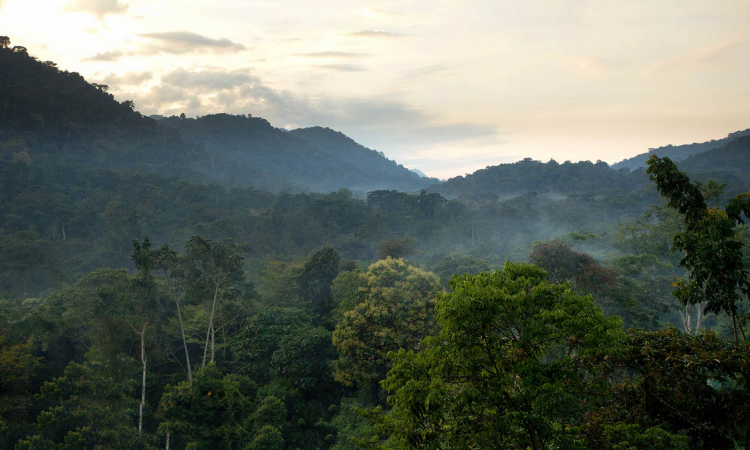
Bwindi Impenetrable National Park, a UNESCO World Heritage site that shelters over 120 mammals, 400 endangered species, 200 butterfly species, and different bird species, where 23 Albertine endemics are sheltered by the forest. It lies on 321 square kilometers with thick dense vegetation cover. Bwindi National Park has a rich rainforest located in the southwestern part of Uganda. It borders the countries of the Democratic Republic of Congo and Rwanda. The different views that can be observed from Bwindi to these countries are the Virunga Mountains in the DRC and Volcanoes National Park, which also offers gorilla trekking experiences. Bwindi National Park has four different sectors that include Buhoma, Ruhija, Rushaga, and Nkuringo. Gorilla trekking sessions last for one hour only to observe the different behaviors of these creatures.
Bwindi’s climate overview
Bwindi Impenetrable National Park experiences a tropical climate. The tropical climate has a mean annual temperature in Bwindi that ranges between 20 and 27°C. The rainfall patterns range from 1,400 to 1,900 mm. Bwindi National Park has two seasons, the dry season and the rainy season. Bwindi National Park has an altitude of about 1,160 to 2,070 meters above sea level.
The dry season of Bwindi Impenetrable National Park.
Bwindi’s dry seasons range between June and August and from December to February. These are the best months for visiting Bwindi National Park. During this season, hiking trails are less muddy and slippery, making the trekking sessions less challenging. The dry season of Bwindi increases the chances of spotting mountain gorillas quickly because they are moving from one place to another looking for food.
Rainy seasons of Bwindi impenetrable national park
In this season, the park experience’s heavy rains support the growth of the ecosystem in Bwindi. Gorilla trekking in this season is more challenging due to the slippery and muddy grounds. It makes spotting mountain gorillas challenging because they always seek shelter for warmth. It provides nice views for various bird species.
Bwindi’s tropical climate
Bwindi Impenetrable National Park faces a tropical climate characterized by its location near the Equator and the ancient rainforest. It experiences cool temperatures that make gorilla trekking suitable for safari activities. The temperature average is between 15°C and 25°C (60°F to 77°F); the moderate temperatures provide favorable conditions for gorilla trekking.
Bwindi impenetrable dry seasons
The dry months of Bwindi National Park are June, July, and August. These months are relatively hot during the day and cool towards the night. December, January, and February have a short dry spell where rains can occur at any moment. The temperatures in these months range between 12°C and 22°C.
Rainy months of Bwindi
Months between March, April, and May. The rains increase, making it difficult to access the roads to the park premises. In these seasons, the forest grounds become slippery and muddy, making gorilla trekking challenging. Bwindi experiences an annual rainfall pattern of 2390 mm yearly. Altitude in the park varies depending on the temperature ranges.
Bwindi Impenetrable National Park faces cold conditions in the morning hours and cool temperatures in the night.
Activities that can be done in the different seasons of Bwindi
In the dry season between the months of June and August and from December to February, the forest trails are dry, making it easy to track down the mountain gorillas. In these months, photographers have better views to take pictures.
In the wet season between the months of March to May and September to November, these months favor bird watchers since Bwindi National Park is a home to different bird species where 23 Albertine endemic species can be spotted. Due to the remoteness of the Kanungu district where Bwindi is located, it makes it difficult to access the park due to the poor roads that sometimes flood. It is always misty and cold, making the photo views unclear.
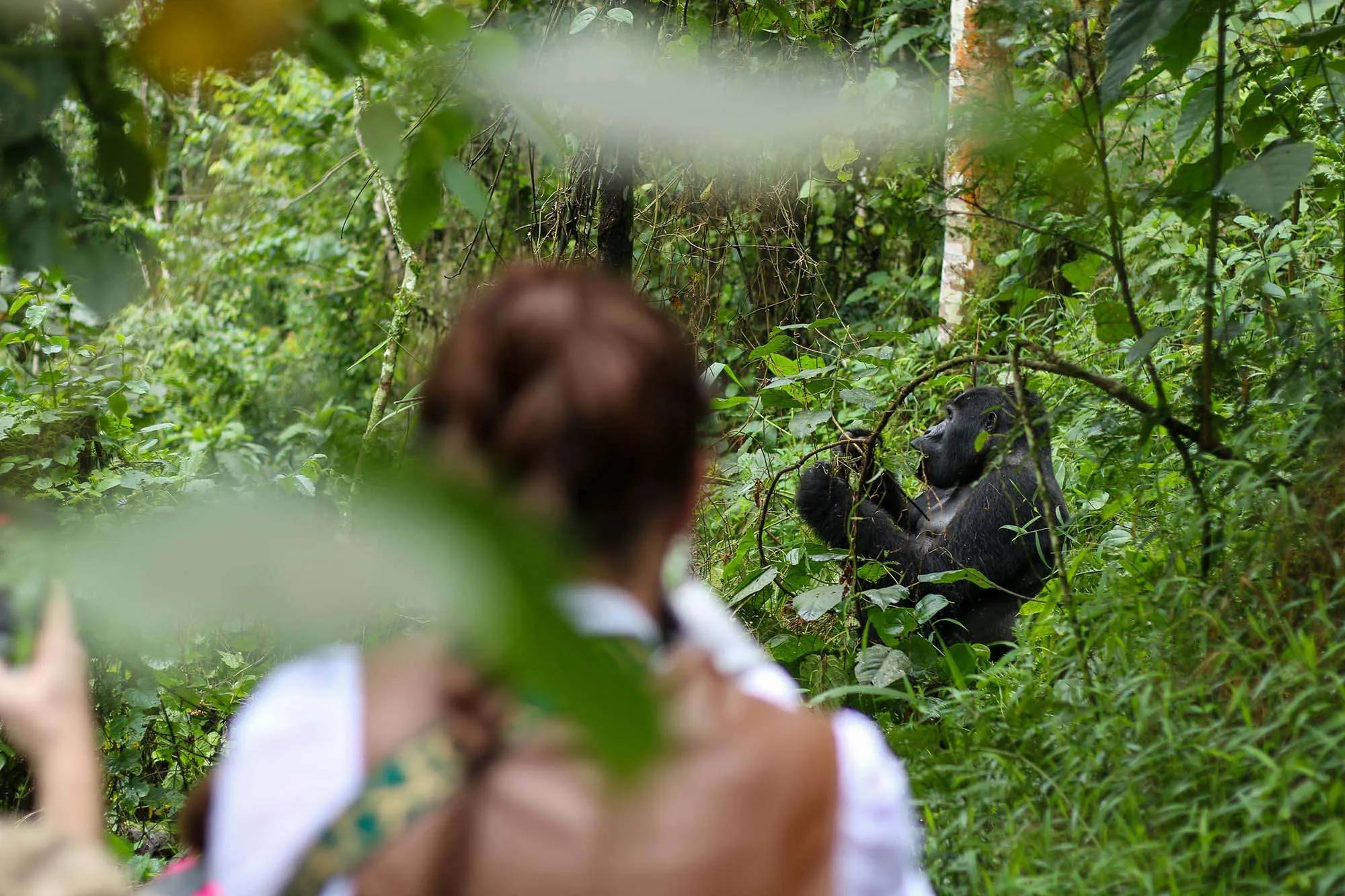
Packaging guide for Bwindi weather
Essential things to pack when visiting Bwindi National Park for the Uganda safari include warm jackets and sweaters in case rains occur during the trek.
Pack plenty of energized snacks and drinking water to stay hydrated. Since Bwindi is a forest, it is hard to access shops to purchase snacks, and gorilla trekking has long durations between 2 to 7 hours and depends on how fast you spot a gorilla family.
Waterproof hiking boots that will manage the steep rugged terrain. Insect repellent to minimize the bites of insects like mosquitoes that transmit diseases like malaria. First aid kit so that in case you get injured, immediate support is provided. Camera equipment like binoculars and extra batteries for the cameras that are used to take pictures.
How to prepare for Bwindi weather
Bwindi National Park has lush evergreen forests that experience heavy rainfall. Gorilla trekking is easy during the dry seasons of December to February and June to September when trails are less muddy and slippery. The rainy season is more challenging, especially during the months of April to May and October to November.
The high altitudes of Bwindi National Park, characterized by rugged, mountainous terrain, are demanding in the rainy season, making it difficult to trek mountain gorillas.
Weather conditions in the different sectors of Bwindi impenetrable national park
Bwindi has four sectors that include Buhoma, Nkuringo, Ruhija, and Rushaga. These sectors experience different climates.
Buhoma weather conditions
It is located in the northern part of Bwindi National Park, which not only carries out gorilla trekking but also other activities like cultural tours, among others. The Buhoma sector experiences a tropical climate. Temperatures in this sector range from 7 to 20°C and sometimes 20 to 25°C. It experiences an average rainfall pattern of up to 2390 mm. It experiences the longest dry spell in Bwindi.
Ruhija weather conditions
This sector is located in the east part of Bwindi. It experiences an equatorial climate with temperatures between 7 and 27°C during the dry season. The Ruhija sector is known for having the highest point in Bwindi, called Rwamunyonyi Hill. The rainy season varies, ranging between 1400 mm and 1900 mm. The best time to visit this sector is during the dry season since the forest grounds are dry and less slippery.
The Rushaga sector and Nkuringo are located in the southern part of Bwindi National Park. Weather in these sectors is influenced by altitude. These are located in the dense, thick forests of Bwindi, with temperatures ranging from 7 to 20°C. Rainfall patterns range between 1500 mm and 2000 mm. The best time to visit these sectors is during the dry season.
In conclusion, Bwindi Impenetrable National Park experiences a tropical climate. This climate favors various activities like gorilla trekking, gorilla habituation, and nature walks, among others.