The Future of Mountain Gorillas in Bwindi Forest
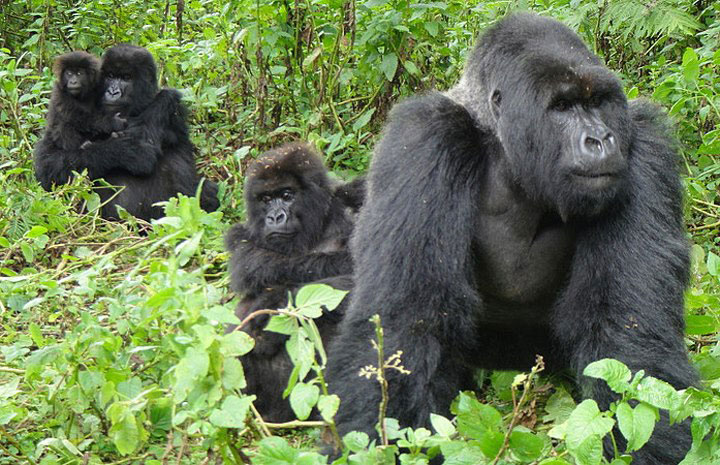
Can Bwindi’s Mountain Gorillas Survive Long-Term? Future of mountain gorillas in Bwindi; Deep in the heart of southwestern Uganda lies the wilderness of Bwindi Impenetrable National Park. A home to half of the world’s remaining mountain gorillas. It is a UNESCO World Heritage Site that is characterized by a rugged terrain where the mountain gorillas have survived.
Mountain gorillas are characterized by staying in the highlands where their strong, muscular limbs help them climb steep slopes, walk across uneven ground, and pull aside the dense vegetation cover. They have large chests and long arms that enable them to navigate through the forest. Mountain gorillas have thick fur that helps them insulate the cold temperatures.
Mountain gorillas are herbivorous animals that feed on over 100 plant species that include leaves, stems, shoots, and bark. They move slowly in the dense forest looking for the most nutritious greens, which provides them with all the water they need.
Mountain gorillas live in stable social groups led by the dominant silverback. The strong leadership enables them to move through the thick vegetation, avoid threats, and find food efficiently. Infants are carried by their mothers as well as protected by the group, while older gorillas are taught survival skills by observing their elders.
The park being owned by the Uganda Wildlife Authority as a parastatal government body. The park is being provided with maximum protection, and communities are adjacent to access the park’s resources.
The population of mountain gorillas has increased steadily since efforts are being put in place, like anti-poaching measures, habitat protection, and support for local communities through ecotourism. The increase is due to sustainable conservation programs and community involvement.
The prevention of diseases that can pass through humans to gorillas is done by hiring gorilla doctors and other veterinary programs to monitor the health of the gorillas.
The research and monitoring are scientists studying the behaviors, eating habits, and way of life of the gorillas, hence improving on conservation strategies.
Despite the various conservation strategies that are emphasized, gorillas face challenges like habitat loss due to human settlement and agricultural activities like crop farming, poaching, and disease transmission from humans that cause illnesses among gorillas.
In conclusion, mountain gorillas in Bwindi National Park are more than just survivors; their resilience, intelligence, and social bond make them uniquely adapted for life.
Is Gorilla Trekking In Bwindi Worth It? The Cost
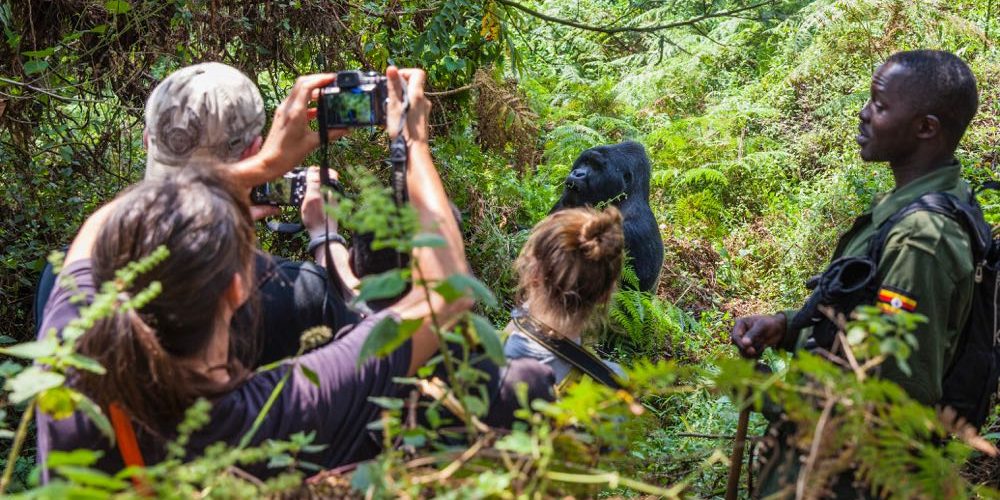
Yes, gorilla trekking in Bwindi on a Uganda safari is worth the cost because the money charged gives visitors an opportunity to see mountain gorillas in Bwindi, making it the most active booking by travelers while visiting Uganda. Bwindi Impenetrable National Park is located in the southwestern part of Uganda, sharing the border with Congo. It is the only park where visitors can trek and see mountain gorillas in their habitats. Bwindi Forest is divided into four sectors, which include the Buhoma, Rushaga, Ruhija, and Nkuringo sectors.
The money paid helps in the conservation and protection of the mountain gorillas and their natural habitat in Bwindi Forest. The trekking activities also bring foreign exchange, where tourists from different countries come to trek and also pay entrance fees, which are used to protect Bwindi Forest and the wildlife it hosts.
Money got through gorilla trekking permits helps to support local communities through funding schools, clinics, and community projects, hence improving their livelihood. It also enables the construction of infrastructural developments like roads, hence improving accessibility.
Gorilla trekking cost is worth it because visitors get to walk through the breathtaking natural rainforest and meet the giant creatures, hence creating a thrilling experience that has impressed some tourists to do it over and again.
In conclusion, it is worth going trekking in Bwindi Impenetrable National Park to see the giant creatures, which share 98% DNA with humans, making us close cousins. And there are only two parks where mountain gorillas are found, and those are Bwindi Impenetrable National Park and Mgahinga National Park.
Bwindi Vs. Mgahinga National Park: Which One Is Better?
Bwindi National Park and Mgahinga National Park are parks found in Uganda where people visit to see mountain gorillas and get to watch their habitats. The differences in these national parks are as below:
Bwindi Impenetrable National Park is located in southwestern Uganda in Kanungu District, and Mgahinga National Park is located in southwestern Uganda in Kisoro District.
Bwindi Impenetrable National Park is approximately 321 square kilometers, while Mgahinga National Park is approximately 33.7 square kilometers.
Bwindi National Park has an altitude of 1,160-2,607 meters, and Mgahinga National Park has an altitude of 2,227-4,127 meters.
Bwindi National Park is cooler throughout the year with low rates of sunlight and more rainfall throughout the year, while Mgahinga National Park is colder with more fog throughout the year and average rainfall patterns.
Bwindi Impenetrable National Park has a dense tropical rainforest, and Mgahinga National Park has Afro-montane vegetation with bamboo and alpine forests.
Bwindi Impenetrable National Park has about 12 habituated mountain gorilla families, while Mgahinga National Park has 1 habituated mountain gorilla, which is called Nyakagezi.
Mountain gorilla trekking in Bwindi is more challenging because of its rough terrain, while Mgahinga National Park has a fairly straight and shorter terrain.
Apart from the mountain gorillas, Bwindi National Park has 120 mammals and 350 bird species, while Mgahinga National Park has 70 mammals and 180 bird species.
Bwindi National Park does not offer mountain climbing to its visitors, but Mgahinga National Park gives visitors an opportunity to hike Mount Muhabura, Mount Gahinga, and Mount Sabyinyo.
Around Bwindi, tourists are able to visit various local communities since the forest stretches through a wider area, while in Mgahinga National Park, visitors are able to see few communities, like the Batwa people, only.
Bwindi Impenetrable National Park offers various activities like cultural experiences, nature walks, gorilla habituation, gorilla trekking, Lake Bunyonyi views, and bird watching, while Mgahinga National Park has limited activities for tourists.
Bwindi National Park can be accessed through road and air. The road trip takes about 9 to 10 hours, and visitors can access the park through Queen Elizabeth National Park. You can pass through Kabale District to Kanungu District to the park. Some tourists can access the park through Rwanda.
Mgahinga Gorilla National Park is also accessed by road from Kampala through the Kisoro district or from Kigali. Kampala route takes about 9 to 10 hours and from Kigali it takes about 4 hours.