How Gorillas Communicate: Sounds, Gestures, and Behavior
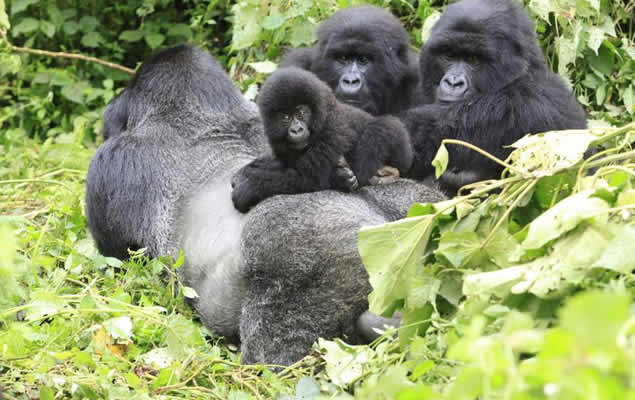
How do gorillas communicate? Gorillas are the largest primates and share 98% DNA with humans. They are the closest relatives to humans, and they are divided into the eastern and western gorillas. Besides being our close relatives, gorillas can’t speak as humans, but they communicate in various ways, like body postures, vocalization, and facial expressions. Here are the different ways gorillas communicate:
They communicate through grunting and barking. They make these sounds when they travel through the dense forests, which helps other gorillas to know their whereabouts or findings. They also use these to socialize with others.
Roars and scrums that show warning in case there is danger and signs of alarm. They also communicate by producing blenching sounds, which show contentment among mountain gorillas.
Among gorilla infants, they whimper, cry, and scream when they are calling out to their mothers or seeking food. Mountain gorillas hum and sing when they find their preferred food.
Facial expressions among mountain gorillas help them to know which mood by looking at their faces. Some show facial expressions by smiling or yawning. They also communicate through vocalization where different tones are used.
They communicate through a playful face by opening their mouths with a low-hanging bottom lip with invisible teeth. This is mostly done by the juvenile. Mountain gorillas also communicate through smiling to show submission.
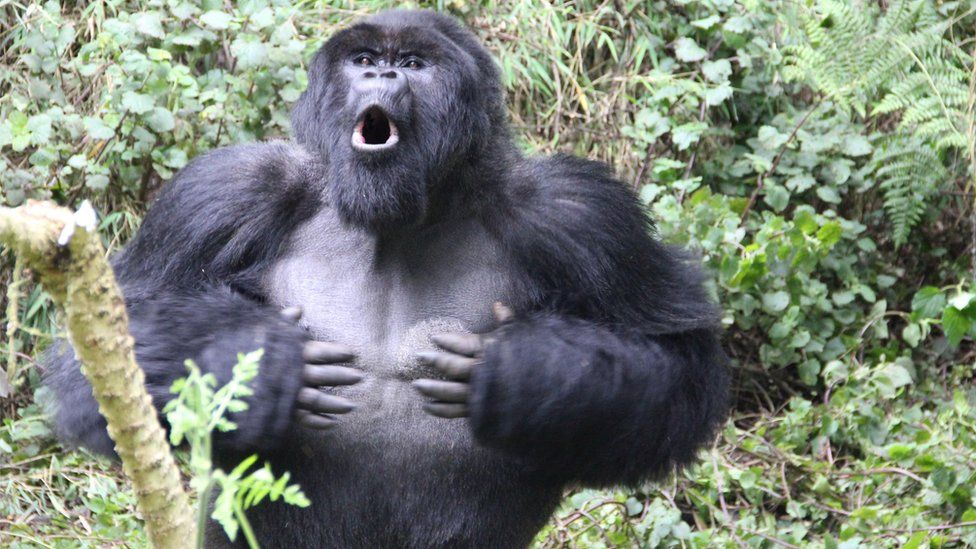
Chest beating is the most used gesture by mountain gorillas because they have larger air sacs in their chests. They do this when they are about to fight another gorilla, and it is normally done by the silverback.
Why do gorillas beat their chests?
Chest beating in gorillas is the most known behavior among mountain gorillas. The chest beating involves gorillas raising their arms and striking their chests with fists, producing a deep thudding sound. This act can last about a few seconds or minutes, and it is always accompanied by eye contact and gestures.
Chest beating is a way gorillas communicate. The sound produced by the chest can travel long distances, allowing gorillas to communicate through the dense, thick forests. Cheating beating is a display of threats that the dominant silverback uses most. It shows strength, showing other gorillas that the silverback is not challenged. It is a territorial defense.
Chest beating sounds can serve as intimidation among the gorillas. A silverback can beat his chest, showing power and dominance.
How fast can gorillas run?
Gorillas are the largest primates known for their strength and intelligence. Gorillas’ speed differs based on their weight and height. They use knuckle walking and quadrupedal movements, which make them run 20 to 25 miles per hour depending on the distance.
They run to escape from predators, while others run because of territorial disputes. The thick dense forests make their speed slow down compared to open space.
How do gorillas sleep?
Gorillas live in groups also known as “troops.” Each group is dominated by the silverback, and the group consists of 10 to 40 individuals. There are two ways these great primates spend their nights. They sleep while nesting in trees, while others are on the ground. They nest around the ground for security purposes. Gorillas spend their time sleeping, especially during midday, late afternoon, and at night.
Do gorillas fight each other?
Gorilla fights are rare because they are gentle creatures and love their peace but aggressive when provoked. Mostly, gorilla fights are among the silverbacks that have sharp canines and great strength, making them dangerous opponents when fighting. The canines penetrate through the flesh of other gorillas, hence causing harm. They begin their fights through beating their chests so hard and loud while stamping their feet on the ground. They also use their hands and feet during fighting. Their arms have strong muscles and are large, enabling them to defeat each other. Reasons as to why gorillas fight are because they fear challenging their authority, and this happens when a male gorilla matures and tries to convince other members to join him in challenging other families.
Are gorillas territorial
Gorillas are non-territorial due to their large areas where they live and move. They avoid areas where other gorilla groups are to prevent conflicts.
How do gorillas protect their young ones
Mountain gorillas are the most loving primates to their infants, as they show and provide complete care to the young ones during their infant stages. They carry their young ones on their chests after birth and later ride them on their backs.
Mountain gorillas hardly allow others to carry their infants, as they sometimes lend a hand when mother gorillas have gone to hunt for food. Female gorillas lend a hand in case they have not given birth; they practice childbirth skills and maternal skills.
How long is the gorilla pregnancy
Mountain gorillas give birth to single infants, with twins being looked at as a blessing. The sexual hormones of mountain gorillas are similar to those of humans. Gorillas spend 5 to 9 months pregnant. The apes give birth between the ages of 10 and 12, when fertilization rates are high. During the ovulation stage, the female approaches the male for mating. The infants are born throughout the year after a spacing of 4 to 6 years for the next childbirth.
During pregnancy, gorillas experience discomfort just like humans. The infants usually weigh 2 kg and have pale grey hair. After 3 months of infants transitioning from breast milk to fruits, stems, roots, and leaves. Gorilla babies at birth are very vulnerable and need constant care and attention. When the infants have matured and become independent, they start to learn survival skills from their elders, like mimicking their gestures and the way they hunt for food, among others. Despite the silverbacks’ leadership, they are also responsible for protecting their offspring through the jungle.
In conclusion, gorillas’ speed is about 25 mph due to their strength, which makes them fascinating creatures. Regardless, they are friendly wild animals that need their peace, and when shown any sign of interruption, they charge. They live happily and protect each other as gorilla families.