Why Silverback Gorillas Are Vital to Forest Ecosystems.
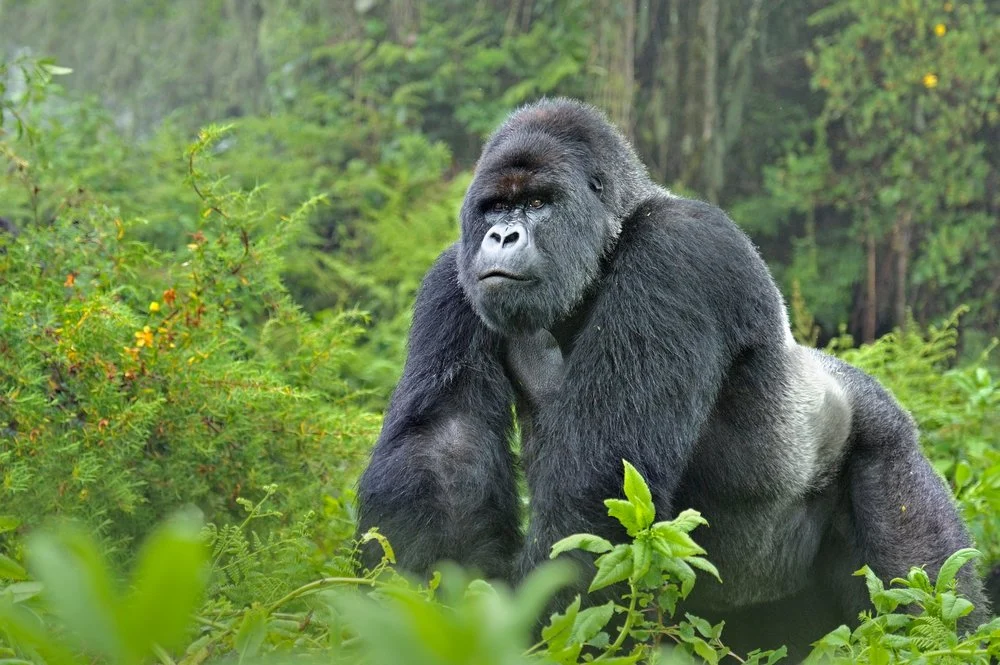
Why Are Silverback Gorillas Important? Silverback gorillas are adult male mountain gorillas known for the silver-colored hair on their backs. Their name, “silverback,” comes from the silver-grey fur that develops on their backs. This fur helps them to be differentiated from other young males or females. They are physically large and strong compared to other gorillas. They are 5 to 6 feet tall when standing and weigh more than 400 pounds. In Bwindi National Park, these gorillas play a key role as leaders of their group. Silverbacks are herbivorous animals, and they feed on leaves, fruits, stems, shoots, roots, and flowers. They are important gorillas because
They are troop leaders responsible for leading and guarding their family groups, which include female and infant gorillas and the offspring.
Silverback gorillas play a crucial role in the ecosystem because they act as gardeners for the forest. As they feed on the fruits, they dispose of the seeds in different areas, enabling further growth. While they feed on plants, they prevent overgrowth of plants, enabling light rays to penetrate to the low plants.
Silverbacks ensure the safety of their gorilla families when there is any threat or danger in terms of predators. They also decide where they should hunt for food and water. He makes communication through gestures, vocals, and even by leading physically.
It helps create harmony within the gorilla family. For instance, in case of a fight, he intervenes to stop further injury, creating peace among the troop.
How do gorillas mate?
Gorillas are the largest living apes on earth. They inhabit the lush tropical rainforests, and they are mostly herbivorous species that share 98% of their DNA with humans. There are mainly two gorilla species, which include the eastern gorillas and the western gorillas. They are subdivided into mountain gorillas, eastern lowland gorillas, Cross River gorillas, and western lowland gorillas.
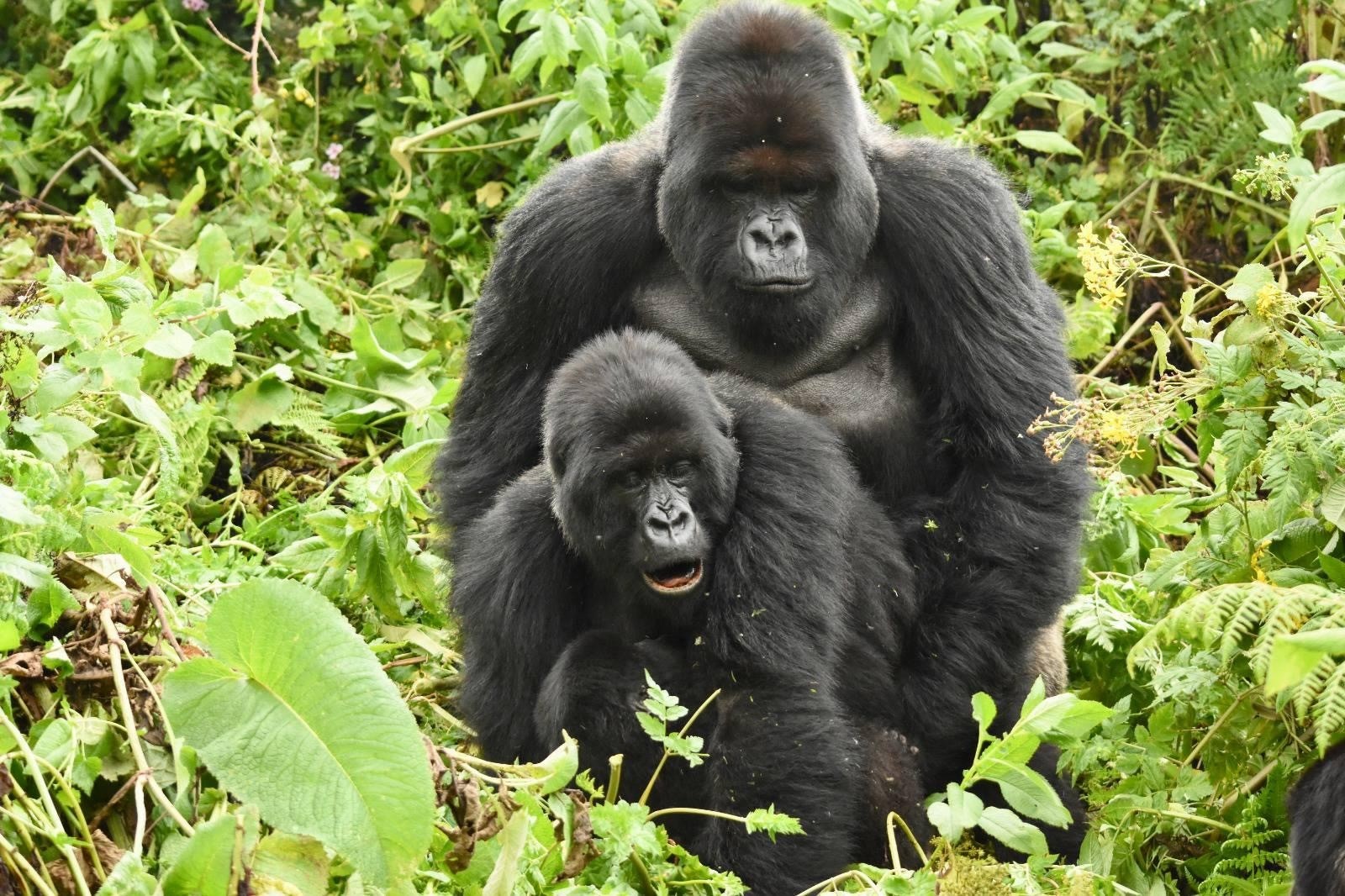
Gorillas mate throughout the year. The silverback mates with females while they are ovulating. Mating is usually done with a sexually active female; even the silverback may initiate it through approaching the female, touching her, or making display sounds. If the female is inactive, the silverback may respond aggressively through charging or slapping the female for acceptance.
Mating occurs on the ground with the female kneeling down on the ground while the male copulates on top, while some gorilla species, like the mountain gorillas, mate facing each other.
Can gorillas feel love?
Yes, gorillas feel love and affection. Gorillas show love through babysitting their infants; this is done when females are often taking care of their female infants to help raise and protect them. This allows mother gorillas to hunt for food.
They also show love through grooming while resting. This is done when they gently pick into their hair, removing any foreign material. Gorillas show love through constant plays and interactions. This is often done when they are running around, wrestling each other and laughing. Mother gorillas cuddle, play, and nurture their infants, hence creating constant affection.
What are gorillas? Facts about the World’s Largest Ape
Gorillas are the largest apes, and they are stronger than humans. They carry 98% of the DNA of humans. In the world, they are only two types of gorillas: eastern gorillas and western gorillas. They are subdivided into different species: eastern lowland gorillas, eastern mountain gorillas, western lowland gorillas, and western cross-river gorillas. They live in family groups called troops. The family groups consist of 5 to 10 gorillas per group. Each group has a family head called the “silverback,” which acts as their leader and mates with the female gorillas.
Gorillas reproduce similarly to humans. Their gestation period takes about 8 to 9 months, and they give birth to one infant at a time. Females reproduce every 4 to 6 years after nurturing their infants to the maturity stage.
Gorillas experience emotions in terms of laughing, showing affection, and grieving for the dead. Gorillas communicate through vocalizations, roars, screams, and beating their chests. They are intelligent creatures that use different tools in the jungle, like sticks to measure the depth of water and branches to walk around, and also make ladders for their young ones to climb.
The scientific name for the eastern gorilla is Gorilla beringei, and the western gorilla is Gorilla gorilla. These gorillas are both endangered species. The eastern gorillas are found in the countries of Rwanda, Uganda, and the Republic of Congo. The western gorillas are found in Angola, Cameroon, the Central African Republic, the Democratic Republic of Congo, Equatorial Guinea, Gabon, and Nigeria. Both gorilla species live in forests.
Facts about the largest ape?
The largest ape disappeared years ago, which was discovered to be the Gigantopithecus. It is said to have lived in southern China two million years ago. The first remains of Gigantopithecus were two third molar teeth, which were discovered in a drugstore. In 1956, the first mandible and 1,000 teeth were found in Luicheng, and numerous remains were identified in about 16 sites.
The Gigantopithecus was once a member of the human line. It was traditionally restored as the massive gorilla ape with 200-300 kg (440-660 pounds) when alive. It is said to have been a generalist herbivore of forest plants with jaws adapted to grinding, crushing, and cutting through fibrous plants.
It primarily lived in subtropical to tropical forests and went extinct 300,000 years ago due to climate changes. It was named by an anthropologist based on two lower third molar teeth. In 1955, a survey team that was led by the Chinese paleontologist was tasked with discovering the original locality of the species. In 1956, the team discovered the first remains, a third molar and premolar, in a cave in Niusui Mountain. The team also discovered more teeth and the first molar in the field.
In conclusion, gorillas have a low reproduction rate, where females give birth every four to six years, making the population increase at a slow rate. And gorillas have the strongest social bond compared to humans.