Are Gorillas Intelligent? Intelligence, Communication, and Problem-Solving.
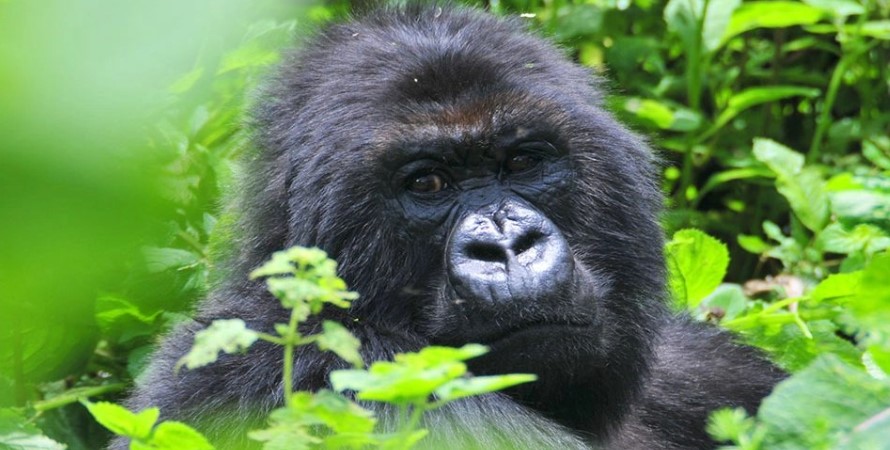
Are Gorillas Intelligent? In the misty thick forests of Bwindi Impenetrable National Park on a Uganda safari lie mountain gorillas that are a far more intelligent species. Despite humans having the highest brain capacity compared to gorillas with a brain weight of 500g. Gorillas have deep emotional intelligence that is parallel to humans. Their face expressions and body language reveal the range of emotions from joy to sorrow.
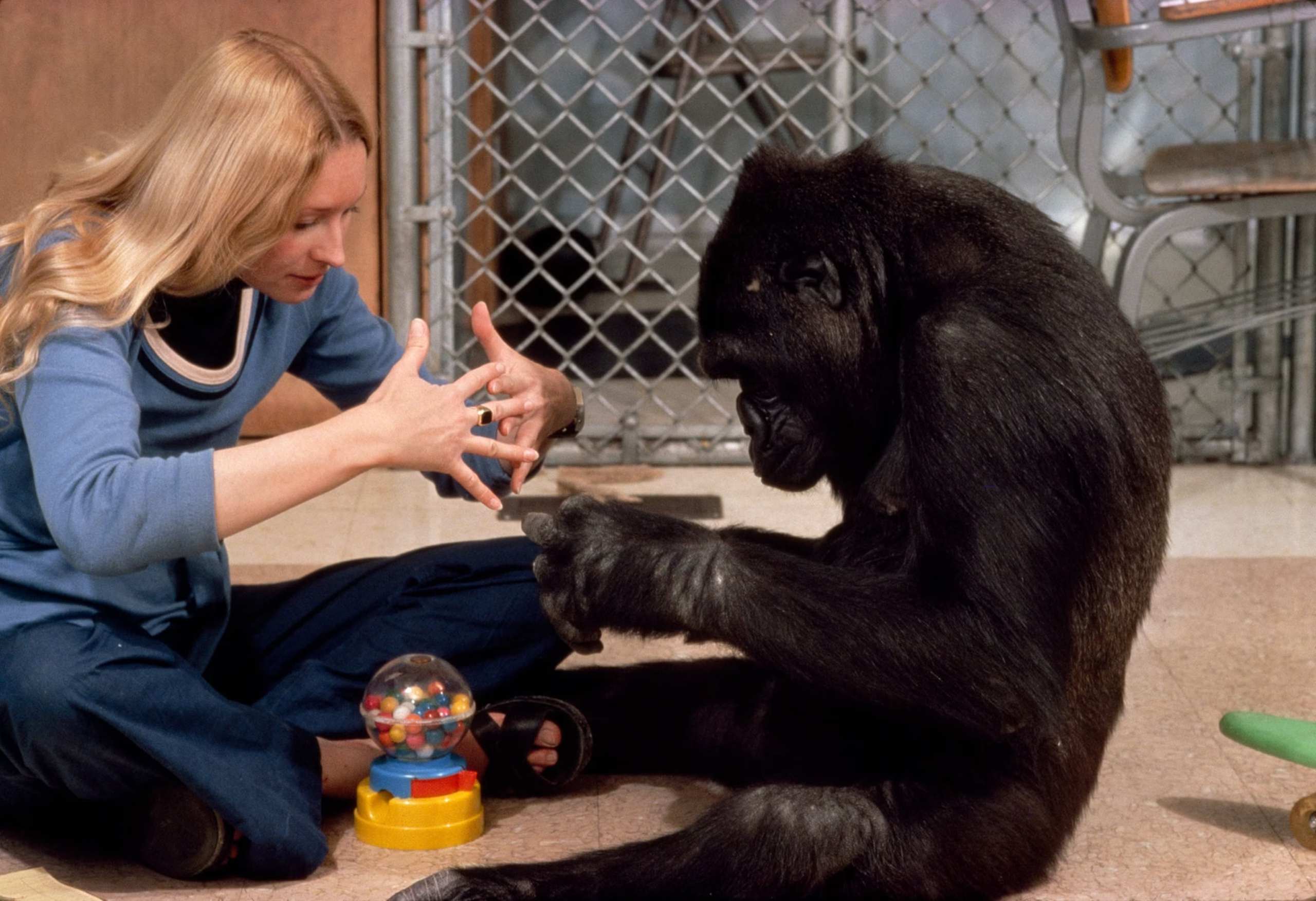
Gorillas express their joy, curiosity, and compassion through providing a view of their inner lives. They display a range of learning activities from their environment and observation. Young gorillas learn essential lifelong skills through mimicking the behaviors of the elder gorillas. This learning process helps them survive the difficult ecosystem. The young ones learn these skills through communication gestures and body language. They can also communicate through vocalization to express emotions and danger.
Gorillas express their intelligence through social structure. They live in groups called troops, which are led by the silverback. The groups are comprised of females, offspring, and infants. The silverback not only governs the group but also makes decisions on the well-being of the group. The gorillas have strong bonds, such as grooming and nurturing their young ones, which helps maintain emotional and group strength. Gorillas have impressive problem-solving skills through the use of available materials like sticks to determine the depth of water. They also use the materials for playtime activities, and this determines their intelligence.
Gorillas have an incredible memory that can be used to learn complex tasks. They have been trained to memorize the shapes and colors and operate basic machines. They recall tasks and even plan for future events. They exhibit cultural learning by passing down their behaviors and knowledge from one generation to another. For example, young ones observe how to hunt for food, build shelter, and more.
Gorillas express emotional intelligence from happiness, joy, sadness, empathy, and grief. This can be done through mourning for the dead, mother showing the infants love and care, which is a sign of intelligence. They can also show empathy by grooming group members and staying close to them.
Gorillas have sensory skills of hearing and sight. They can detect changes in their environment and use these abilities to adapt their behavior. They are able to solve puzzles and understand problems, and this has helped them to think critically. They have shown remarkable abilities through communication, solving problems, and using tools to solve complex bonds.
Are gorillas friendly to humans?
Yes, mountain gorillas are friendly because they are peaceful animals, and they do not attack anyone unless you provoke them or cause a threat towards them. When you approach them, it is advisable to follow the rules given by the guides by minding your business and in case of photos. It is highly recommendable to use flashless cameras since light irritates them.
Are gorillas aggressive?
Gorillas are gentle giant creatures. Besides being friendly, gorillas are wild animals and can get aggressive if provoked or threatened. In this case they get aggressive if a silverback tries to remove a female from another territory or humans get closer to their territory. They are the most understood creatures, although they are shy. There are different ways that make gorillas aggressive, which include the following: During trekking sessions, some visitors wear inappropriate-colored clothes, like bright colors, that may also stand as a threat to gorillas, causing them to charge towards humans. Tourists are encouraged to wear dull colors like green, grey, or brown, which blend with the natural environment.
When tourists spot a gorilla family, they should avoid eye contact since gorillas use eye contact to challenge other members of the group. If humans use eye contact, gorillas see it as a threat.
Gorillas need their space to feel their natural habitats; in case they feel surrounded, they become agitated and can charge towards the humans. That’s why gorilla permits limit the number of trekkers to see the gorilla families.
Direct touching of the gorillas is making the silverback aggressive. In case the leader sees you approaching his gorillas in a way that you start touching them, he is forced to react since he’s protective about his gorillas.
How do gorilla families work?
Gorillas have different families that have different characteristics, and these can be seen during gorilla trekking and gorilla habituation.
In some gorilla families, the silverback heads the gorilla family, and each family possesses a silverback. Some families have 3 to 4 silverbacks making them fight for leadership, and the one that wins is declared to govern that particular family. After the leadership fight, the challenged silverback is forced to leave the group to join other families.
Gorillas move from one place to another searching for food and water. They move as a family to look for food, fruits, and water. Some gorillas, like the blackback, move from one place to another to find new families where he can mate with the females to produce other offspring.
Through mating, female gorillas mate with the dominant silverback, who has the authority to mate with all adult females. In case a silverback and blackback mate with the female gorillas, they are enraged into a fight so that one leaves the group.
Grooming among gorillas is done between two individuals where they get to check each other for ticks. They also clean each other by removing grass sticks and sticky leaves on their bodies. Female gorillas groom their infants from the period of birth to 12 months, when they are left to be independent, but they are still under the watch of their mothers.
In case a silverback dies, another silverback in the family takes over the position; however, it is possible for the silverback and blackback to fight for leadership, and if one is defeated, he is forced to leave the group and choose another group.
In conclusion, a silverback is also called the alpha of the gorilla family. It is named after the silver patches of hair on its back since they grow when it’s mature. It is the social leader, but it not only leads the gorilla family but also shapes the social interactions in the group.