Bwindi Gorilla Trekking Packing List: What to Bring for Your Adventure.
What to Pack for Bwindi Gorilla Trekking: It is encouraged for tourists or trekkers to plan accordingly for the track of gorillas in Bwindi Impenetrable National Park or any country in Africa. These are the things tourists should consider when packing for the trekking adventure.
Tourists should come prepared with any documentation or numbers related to their gorilla trekking permit. Tourists shouldn’t forget to bring their passport, as they will need it to show it when checking in for the trek.
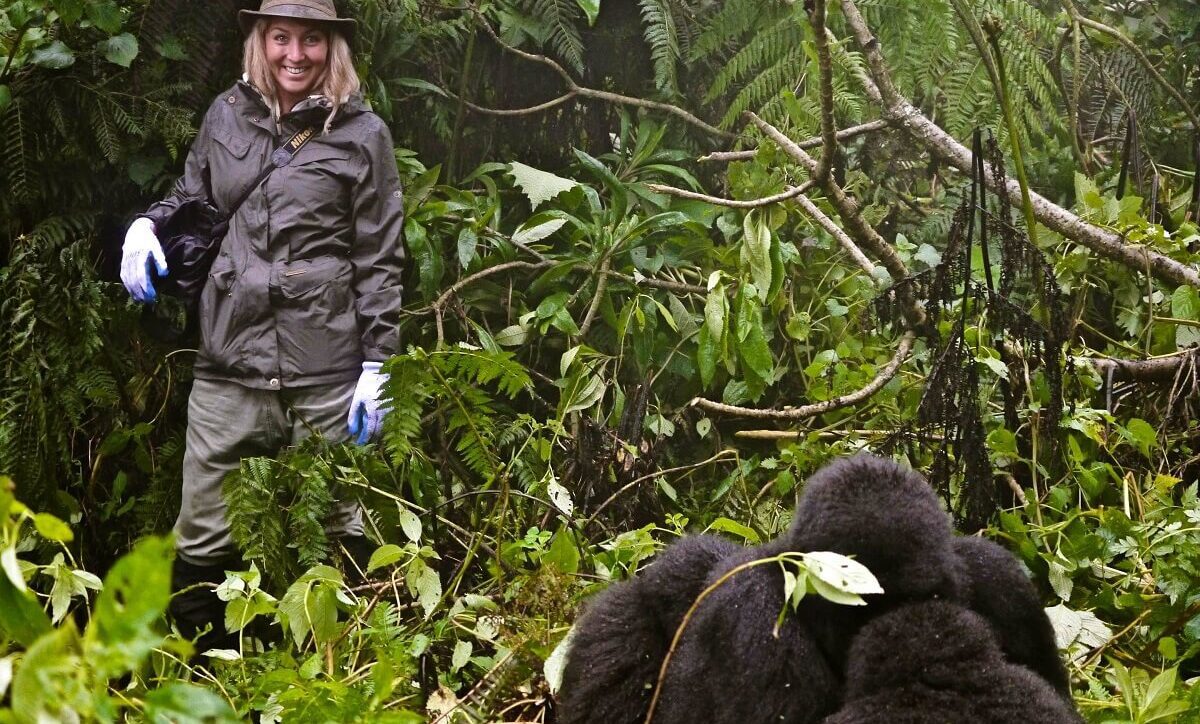
Tourists should move to the park with some local currency for tipping a porter while in the jungle. Tourists should pack long-sleeved shirts or jackets because treks begin early in the morning, and you may be chilly at the start of the trek. Long sleeves are helpful for protecting your arms against stinging branches. Long pants because tourists will be encountering thick vines, fallen trees, and scratchy brush, and they will want to have protection on their legs. Tall socks: keeping the biting safari ants out of your pants is important; the guide will instruct you to tuck your pants into your socks, and tall socks are best for this task. A tracker must also be selective of the colors; he or she should choose what is known as “jungle colors”: cream, brown, grey, and dark green. Very bright colors make trekkers stand out and attract unnecessary attention from the gorillas.
Hiking shoes with a good grip are a must. The terrain can be difficult to navigate, including thick vines, slippery rocks, patches of mud, and more. If shoes are waterproof, that is more preferable. Pack a rain jacket; the national parks where the mountain gorillas live are largely rainforest, and it can rain unexpectedly while on the trek. Gloves because you keep touching plants and tree branches while passing through the forest; it’s ideal to come along with a pair of gloves to avoid hurting your fingers and just in case you touch stinging and sticky plants. Tourists should pack some malaria pills. All national parks where tourists track mountain gorillas are located in malarial zones, and tourists should discuss options to safeguard themselves from malaria with a doctor and not forget an insect repellent also.
Carry with you energy snacks since you will trek for a few hours and then likely stop for a bit to give everyone an opportunity to eat their packed lunches. Bring as much water as you can carry on your trek to avoid dehydration. Tourists should pack a good camera for capturing the moment; binoculars are useful to watch and spot the gorillas from afar. An ordinary camera will be fine provided it shoots well in low light, as you aren’t allowed to use flash. Photography is an important component of your Uganda safari, and tourists should make sure that they have their cameras ready, charge batteries very well, and, if necessary, carry extra batteries, as you will need to take as many photographs in the one hour with the mountain gorillas. Tourists should make sure they switch off flash while taking gorilla photographs.
If hot, tourists can carry a hat to protect them from direct sun rays; in case they may also need to carry some sunglasses too. We recommend tourists acquire a suitable hiking stick to support and help them hike through the hills and valleys. Basic walking sticks are given free of charge at the starting point, but you can acquire higher-end ones at a cost. We also recommend hiring a porter to help out with the heavy luggage. Porters will also lend a hand during the more difficult sections of the hike. Porters are available just after the briefing or at the starting point of the trek. The services of the porter cost about $15.
Other essential items for packing include travel maps, a guidebook, and an itinerary from the Uganda tours and travel company, cash, or a Visa card for buying souvenirs. A traveler should also consider traveling with a first-aid kit and medications for any lifestyle diseases they may have.
What is a silverback gorilla?
Silverback gorillas are the largest primates on earth. After bonobos and chimpanzees, gorillas are the closest relatives to humans. Their DNA structure is about 98% similar to that of humans. Gorillas are only found in the great forests of East, Central, and West Africa. They are divided into two main species, the eastern gorilla and the western gorilla. Gorillas live in groups or families led by a Silverback. “Silverback” refers to a mature male gorilla. They are distinguished by a greyish white hairline around the back and shoulders. A male gorilla that is too old to be a juvenile but too young to be a silverback gorilla is referred to as a blackback. A silverback is much larger than a female. Compared to a female, a silverback gorilla has a larger head and body and can weigh up to 270 kilograms.
A male gorilla becomes an adult at about 8 years of age, and this is the time most leave the group to stay alone or join other lone males. When leaving a group, a male gorilla is often not fully mature and is generally still referred to as a Blackback. The dominant silverback is the leader of the group and has absolute authority. He dictates what is to be done and when. He determines when to eat and rest and is entitled to mate with all the females in the group. The dominant silverback controls a group containing between 5 and 35 individuals. A silverback is over 9 times stronger than an adult male. Their incredible strength is not just because of muscle mass. A silverback is not aggressive unless threatened. The dominant silverback leads by charisma and example. He is always peaceful and rarely uses force. It is only aggressive unless it encounters a threat or intruders or if it wants to assert dominance. When a silverback recognizes a threat, he will first send a warning to the intruder by standing up while drumming up his chest.
If the above warning doesn’t work. He will tear up and throw plants at the intruder while making a deafening sound, and then he will try a mock attack using all four legs. A silverback consumes mainly fruits, shoots, and leaves. They also love termites, ants, and certain insects.